The intersection of human resources and corporate compliance has turned into a high-stakes legal minefield. As employment regulations continuously shift across local, state, and federal levels, HR departments are facing unprecedented accountability. Virtually every routine talent decision from reviewing employee performance to approving medical leaves of absence now carries deep administrative audit, compliance, and litigation implications.
Compounding this strain, many organizations are rushing to implement generic generative AI tools to handle administrative writing. However, relying on public, black-box language models introduces major corporate liabilities, including hallucinated policy facts, biased performance evaluations, and unverified legal interpretations that fail under regulatory scrutiny.
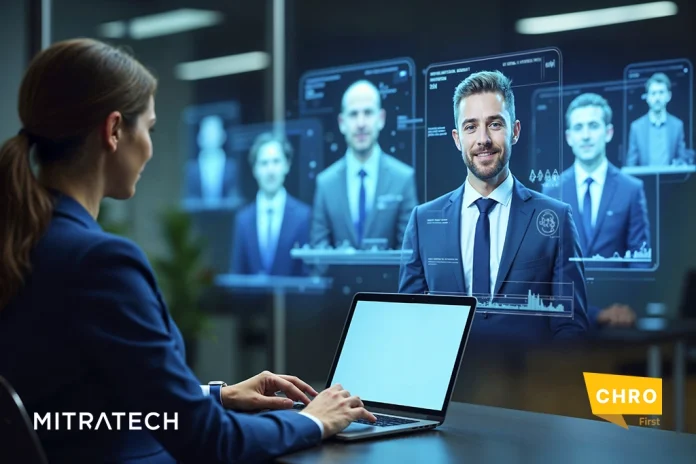
Addressing this critical governance friction, workforce compliance technology leader Mitratech announced a significant expansion of its ARIES™ AI platform, rolling out a trio of expert-backed, regulation-aware compliance intelligence solutions.
Rather than forcing companies to replace their existing HR infrastructure, the expansion functions as an intelligent middleware layer that embeds explainable, defensible guidance directly into everyday employee lifecycle workflows. For the HR Technology, Workforce Compliance, and Risk Management industries, this rollout sets a strict new market standard: shifting HR artificial intelligence away from superficial text generation toward audit-ready legal defensibility.
Also Read: Papaya Global Launches “ONE”: An Agentic Compliance Intelligence Platform
The News: Three Purpose-Built Solutions for Targeted Compliance
The foundational advancement behind Mitratech’s announcement is its rejection of generalized AI engines in favor of specialized models trained on years of proprietary, expert-authored compliance content. Operating under a strict “human-in-the-loop” design paradigm where the technology guides rather than dictates decisions, the platform introduces three solutions available immediately:
ARIES Compliance Agent: An advanced AI agent designed to provide HR professionals with fast, contextual answers to complex workforce questions. Crucially, the interface includes a native escalation pathway to human compliance experts when a nuanced scenario demands qualitative corporate judgment.
Mitratech Leave: Applies the ARIES engine to automatically cross-reference employee requests against a complex matrix of federal, state, local, and internal company policies. It generates clear, explainable, and audit-ready leave eligibility determinations to prevent compliance drift.
ARIES Mitratech Perform: Streamlines the review cycle by helping managers synthesize disparate performance feedback and surface recurring themes. The tool programmatically builds consistent, objective, and legally defensible performance documentation to reduce wrongful termination or bias claims.
Transforming the HR Tech and Workforce Compliance Industry
The transition to deeply grounded, explainable compliance intelligence layers forces fundamental operational shifts across the broader human capital vendor landscape.
The Obsolescence of “AI for AI’s Sake” Feature Marketing
For the past several years, HR software vendors competed aggressively by slapping generic OpenAI API wrappers onto their text boxes, marketing basic draft-generation features as revolutionary upgrades. Mitratech’s launch highlights the strategic failure of un-governed automation.
In a corporate environment where a single mismanaged employee file can trigger an existential regulatory penalty or class-action lawsuit, enterprise software buyers are demanding strict explainability. The market standard is forcing a pivot away from flashy text auto-completes toward heavily cited, auditable recommendations backed by explicit source materials and policy references.
Unifying Core HR Workflows with Corporate Governance
Historically, enterprise technology architectures maintained a rigid separation between human resource systems (HCMs) and corporate governance, risk, and compliance (GRC) control towers. HR teams tracked employee data while corporate legal teams separately managed regulatory frameworks.
By embedding regulation-aware logic directly into frontline manager workflows, Mitratech bridges this organizational silo. This integration forces competing software developers to upgrade their ecosystems, transforming standard administrative software databases into proactive, compliant risk-mitigation fabrics.
Broad Operational Impact on Enterprise Businesses
For corporate entities looking to scale distributed operations while insulating their balance sheets from legal vulnerabilities, deploying an expert-grounded compliance engine delivers clear commercial advantages.
Insulating Corporate Capital from Expensive Litigation Drag
When a line manager writes an inconsistent, poorly documented employee performance review or mishandles a regional medical leave request, they expose the enterprise to devastating legal penalties, back-pay mandates, and discrimination claims.
Ensuring that every critical workforce decision is informed by clear rationale, explicit policy references, and unalterable supporting documentation provides an immediate corporate shield. Organizations secure a highly defensible audit trail capable of surviving strict regulatory reviews and court challenges protecting net operating margins and corporate capital.
Recovering Administrative Capacity for Strategic Retention
Managing localized labor laws across hundreds of remote or distributed team members frequently buries internal HR generalists under a massive mountain of clerical research spending hours manually parsing changing state sick-leave laws and updating spreadsheets. Offloading these complex tracking tasks onto an automated, expert-grounded engine recovers vital internal capacity.
HR professionals are liberated from routine administrative bottlenecks, allowing them to redirect their full attention toward high-touch, high-value organizational strategies like cultural integration, leadership succession, and proactive employee relations turning the HR department into an active engine of corporate growth.

