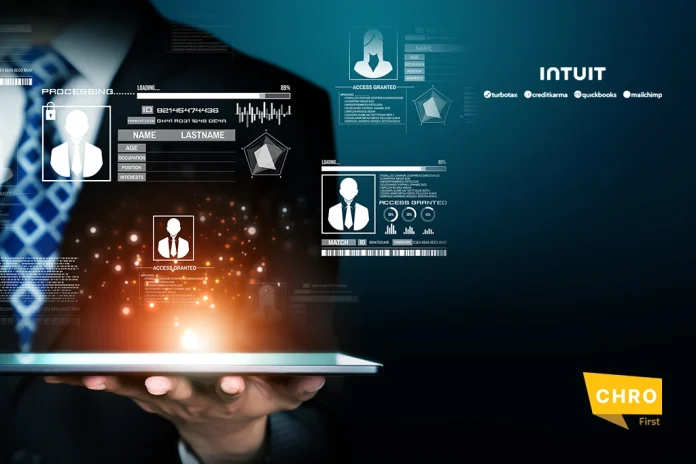
Intuit has unveiled QuickBooks Workforce, a new AI-native human capital management (HCM) platform designed to help small and mid-market businesses manage hiring, payroll, benefits, workforce operations, and employee engagement through a unified system. The launch marks a major expansion of Intuit’s workforce management strategy, building on QuickBooks Payroll, which already supports more than 18 million workers across the United States.
QuickBooks Workforce brings together human resources and workforce management functionalities into one platform, which allows companies to improve their processes for employee onboarding scheduling payroll, compliance, and performance with less effort. Intuit incorporates AI in every aspect of the system to lift the burden of administrative tasks and at the same time support businesses in making quick, data-based decisions regarding their workforce.
This platform unveils smart automation capabilities that can be very helpful for workforce planning, payroll processing, benefits administration, and employee communications. Instead of using separate HR systems, companies can handle workforce operations from one AI-driven environment that is directly integrated into the larger QuickBooks ecosystem.
One of the main features of the launch is Intuit’s further acceleration towards AI-native business platforms. The company has also widely embedded AI in its products, QuickBooks and TurboTax being two examples, to help users automate workflows and get predictive insights. With QuickBooks Workforce, the company is carrying out its human capital management strategy with AI, so that businesses can not only use AI for their financial operations but also for workforce optimization and employee management.
Also Read: ServiceNow Introduces Autonomous Workforce for HR Transformation
Implications for the HR Industry
QuickBooks Workforce launch marks a step in a much bigger change happening in the HR sector – where integrated systems, managed by AI, are becoming the norm for handling the workforce. Traditionally payroll recruiting benefits, and employee administration systems were functioning mostly in isolation within many small and mid-sized businesses. AI-native Human Capital Management (HCM) platforms are transforming this by consolidating workforce operations into single unified ecosystems.
This evolution opens up a whole new world of possibilities for HR executives and business owners to make work processes both more efficient and enjoyable for the employees at the same time. Systems powered by AI can take care of monotonous chores like employee onboarding, payroll changes, and monitoring compliance thus freeing up the HR personnel for more important matters related to human resources planning and development.
Besides, the advent of smart workforce analytics paves a way for companies to understand in a more granular manner their expenditure on labor, the patterns of workers’ efficiency, the areas that need retention aspects, and the gaps in talent acquisition. Such detailed insights support the formulation of more effective workforce strategies and, at the same time, the proper alignment of talent with the goals of the business.
What’s more, QuickBooks Workforce underlines the trend whereby top-tier HR technology is becoming more and more accessible. Sophisticated, AI-driven workforce tools that were the domain of only large corporations are now being offered to Small and Medium-sized Businesses (SMBs) as well, which means that these smaller entities can also compete for talent in a more effective manner.
Business Impact and Strategic Value
The platform provides businesses with the opportunity to streamline workforce management and simultaneously enhance their operational agility. Integrating HR and payroll in one AI-driven platform allows companies to cut down manual work, lower the number of administrative errors, and better handle compliance issues.
Besides, automated workflow and real-time workforce data can enable organizations to speed up decision-making regarding hiring scheduling pay, and employee retention. This is of high value for expanding firms that are handling complex workforces with increasing intricacy.
In addition, the unified workforce platforms not only meet the connectedness needs of the employee experience but also allow workers to get supply of their payroll details benefits work hours, and HR help via a single sided communication channel, making them feel more involved and daily operations less of a hassle.
Thinking strategically, the platform gives workforce management a seat at the table of key business decision-making alongside other organizational functions through workforce management being productive drivers rather than simple administrative functions. Enterprises that utilize workforce intelligence powered by AI are able to optimize the use of labor, increase the satisfaction of employees, and more swiftly make changes in response to the evolution of conditions of the business.
The Future of AI-Native Workforce Management
QuickBooks Workforce by Intuit underscores a defining trend in modern HR technology: the transition from traditional HCM systems to AI-native workforce ecosystems that combine automation, analytics, and operational intelligence.
For the HR industry and businesses alike, this development signals a future where workforce management becomes increasingly intelligent, predictive, and integrated into core business operations. Organizations that adopt AI-driven workforce platforms will be better positioned to scale efficiently, attract talent, and remain competitive in an increasingly digital and skills-driven economy.

