The biggest workforce challenge in 2026 is not finding people to fill positions. It is ensuring employees have the skills to keep up with the work those positions now demand. AI, automation and changing business models are reshaping responsibilities faster than traditional training cycles can respond.
Yet many organizations still rely on annual training sessions, generic courses and completion certificates to measure employee development. That approach leaves a critical gap between what employees learn and what businesses actually need. Modern corporate training programs must close this gap through personalized learning, AI-powered tools, leadership development and continuous upskilling. The real test is whether employees can apply new capabilities to improve everyday performance.
The Shift from Role-Based to Skills-Based Learning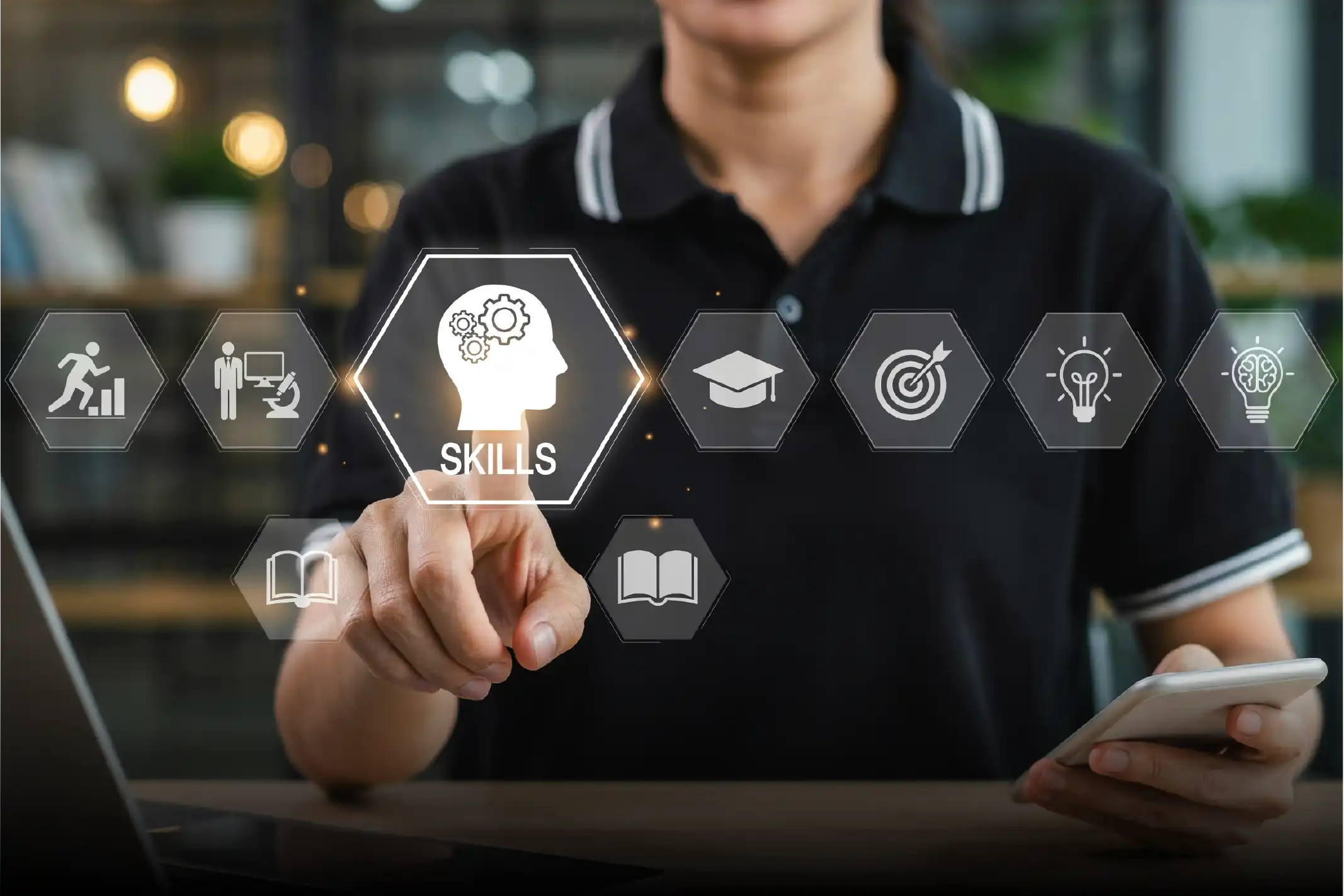
Job titles once gave organizations a fairly clear picture of what employees were expected to do. However, that picture is becoming less reliable as technology changes responsibilities within existing roles. An employee hired for operations, marketing or finance may now need to understand AI tools, interpret data and manage automated processes alongside their traditional responsibilities. Training built around fixed job descriptions struggles to keep pace with these changes.
The World Economic Forum’s 2026 Human-Machine Collaboration Framework estimates that around 40% of future industrial skills are new or emerging. It also highlights growing demand for judgment, machine oversight, accountability and governance of autonomous systems. This signals a deeper shift in workforce planning. Organizations need to understand which capabilities employees have, which ones their roles increasingly require and where the gaps exist.
This is where skills-based learning becomes valuable. Instead of assigning the same training to everyone within a department, businesses can build living skill taxonomies that reflect changing responsibilities. These frameworks help L&D teams identify specific capability gaps and create targeted learning paths. Consequently, corporate training programs become more relevant to actual job requirements. Employees develop skills they can use immediately, while organizations gain greater flexibility to respond to new business demands.
AI-Powered Training Tools and Personalized Learning
AI is changing both what employees need to learn and how organizations deliver training. LinkedIn data shows that job postings requiring AI literacy skills increased by approximately 65% over the preceding 12 months. This growing demand makes AI literacy an important part of employee training and development, even for people who do not work in technical roles.
However, introducing AI training across an organization requires more thought than simply providing access to online courses. Employees in different departments face different challenges. A marketing professional may need to understand AI-assisted research and content workflows, while a finance employee may need training in data analysis and automated reporting. Giving both employees an identical learning programme is unlikely to address their actual needs.
AI-powered learning tools can help create more relevant learning experiences. They can recommend courses based on an employee’s role, existing capabilities, assessment results and learning progress. Furthermore, adaptive learning systems can adjust the difficulty and content of lessons as employees demonstrate their understanding. Micro learning can also bring short lessons, practice exercises and learning resources directly into everyday workflows.
For L&D teams, AI can support content development, skill assessments and learning recommendations. Nevertheless, human oversight remains necessary to check accuracy and relevance. The objective is to make learning easier to access and apply, rather than introduce another technology employee must learn to navigate.
Also Read: Best Practices for Internal Communication in Hybrid Teams: Strategies to Improve Collaboration and Employee Engagement
Redefining Leadership Development in the Digital Age
As AI takes over more routine tasks, leadership development needs to address capabilities that technology cannot reliably replace. Managers must interpret complex situations, resolve disagreements, build trust and make decisions when information is incomplete. These responsibilities require emotional intelligence, ethical judgment, communication and the ability to influence people across teams.
LinkedIn’s 2026 Skills on the Rise research identifies cross-functional collaboration, team management, mentorship, executive communication and stakeholder communication among the leadership and people-management skills experiencing increased demand. These capabilities matter because modern organizations rarely operate through isolated departments. A decision made by one team can affect customer experience, operations, finance and product development. Leaders must understand these connections and help employees work across them.
Consequently, leadership training programs need to move beyond generic management courses. A new manager may need support with delegation and feedback, while a senior leader may require coaching in strategic decisions, organizational change and ethical AI adoption. Context-specific coaching makes development more relevant to the challenges leaders face.
Organizations should also give managers opportunities to practice difficult conversations, handle team conflicts and guide employees through changing responsibilities. These experiences help turn leadership concepts into workplace habits. After all, a manager’s ability to support people through change often determines whether new skills are actually used.
Measuring Business Impact and Workforce Productivity
A corporate training programme can record excellent attendance and completion rates while making very little difference to everyday work. Employees may finish every module, pass assessments and still return to the same habits once training ends. This is why L&D teams need to move beyond participation metrics and examine whether learning changes employee behavior and business performance.
Microsoft recommends evaluating employee AI enablement through five areas: adoption and usage, productivity and time, output quality and decisions, employee experience, and business value. It also recommends establishing a baseline before implementation and using a comparison group where possible. Although this guidance focuses on AI enablement, the measurement approach offers a useful model for evaluating corporate training programs more broadly.
For example, an organization introducing training on a new business platform should first measure existing adoption levels, task completion times and error rates. After training, it can compare these indicators to understand whether employees are using the platform more effectively. Similarly, leadership development can be assessed through changes in feedback quality, team collaboration and employee performance.
However, measurement needs context. A reduction in task completion time means little if error rates increase. Higher tool usage does not automatically indicate better performance either. Therefore, L&D teams should connect learning outcomes with the business KPIs that matter to each department. This makes training ROI easier to evaluate and helps organizations identify where further support is necessary.
4 Steps to Design an Effective Corporate Training Program
Building an effective training programme requires more than selecting a learning platform and assigning courses. Organizations need a clear connection between business priorities, employee capabilities and workplace application. The following four steps provide a practical starting point.
Step 1. Define business KPIs before designing the programme
Start by identifying the business problem that training needs to address. Is the organization trying to improve software adoption, reduce operational errors, shorten task completion times or strengthen customer service? Define measurable outcomes before selecting courses or tools. This gives L&D teams a clear basis for evaluating whether the programme delivers value.
Step 2. Use AI-driven gap analysis to identify learning needs
Assess existing employee capabilities against the skills required for current and emerging responsibilities. AI-powered assessments and skills intelligence tools can help identify patterns, highlight capability gaps and recommend suitable learning interventions. However, managers and L&D professionals should validate these findings against actual work requirements before assigning training.
Step 3. Combine workshops with digital learning
Different skills require different learning environments. Workshops allow employees to practice complex tasks, discuss challenges and receive immediate feedback. Digital courses, short learning modules and simulations provide flexibility and reinforce concepts over time. A blended approach helps employees move from understanding a concept to applying it in their daily work.
Step 4. Integrate manager-led coaching after training
Training should not end when an employee completes a course. Managers need to create opportunities for employees to apply new skills, discuss challenges and receive feedback. Microsoft’s 2026 Work Trend Index found that organizational factors, including company culture, manager support and talent practices, were associated with more than twice the reported AI impact of individual factors such as mindset and behavior. This is an association, not proof of causation, but it reinforces the importance of organizational support. Manager-led coaching helps bridge the gap between learning and consistent workplace performance.
Building Corporate Training Programs That Prepare Employees for What’s Next
Organizations cannot prepare their workforce for changing business demands through occasional training sessions and generic development plans. Skills requirements will continue to evolve, and employees need opportunities to learn, practice and adapt as their responsibilities change. However, investing in new learning platforms or AI tools alone will not solve the problem.
Business leaders must connect training with real capability gaps, measurable outcomes and consistent managerial support. The more important question is whether existing training helps employees perform better when work changes. HR and business leaders should audit their current corporate training programs, identify where learning fails to translate into performance and build a more adaptive approach to workforce development.