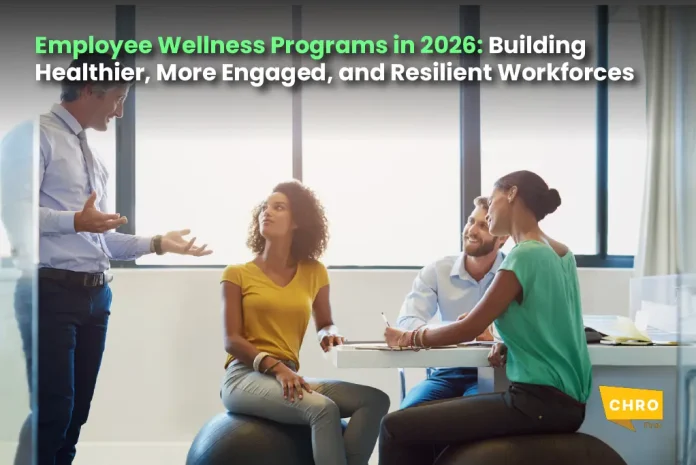
In 2026, wellness is no longer about fruit bowls, gym discounts, or a poster that says mental health matters. Those things did their time. Today, wellness sits much closer to business continuity than employee perks. When people burn out, systems slow down. When stress piles up, risk follows. This situation has necessitated that the corporations reconsider the objectives of their employee wellness programs.
The majority of companies were engaged in the perks game during the period from 2020 to 2024. Add an app. Launch a benefit. Send a reminder email. It looked supportive, but it stayed disconnected. What’s emerging now is different. Wellness is being treated as an integrated ecosystem, one that connects data, leadership behavior, and daily work design instead of operating on the sidelines.
The direction is clear. The World Health Organization frames occupational health as the promotion of physical, mental, and social well-being, not just the absence of illness. It also set a global goal of one billion people enjoying healthier working lives. That alone tells you this is not an HR trend. It is a systemic priority.
This article breaks down how wellness in 2026 is being rebuilt around three pillars. Hyper personalization powered by AI. A broader definition of health that includes financial and social stability. And preventative leadership that acts early, not after damage is done.
How Wellness Went Digital and Finally Got Personal

Most employee wellness programs failed before they even started. Not because people don’t care about their health, but because the systems talking to them felt blind. Same email for everyone. Same monthly newsletter. Same dusty EAP portal nobody logs into unless something has already gone wrong. That one size fits none approach created fatigue, not support. And by 2026, employees have stopped pretending it works.
So the shift is obvious. Wellness is no longer a program. It’s an ecosystem. AI sits at the center, quietly connecting signals that humans usually miss. Not to judge. Not to track. But to intervene early.
Here’s how it actually plays out. Instead of waiting for burnout to show up as a resignation email, predictive models look at anonymized patterns. Sudden spikes in late night logins. Calendar overload without recovery gaps. Declining participation in team rituals. On their own, these signals mean nothing. Together, they tell a story. One that says someone is drifting toward exhaustion long before they say it out loud.
But the real shift is not prediction. It’s response. This is where nudges replace nagging. No manager lecture. No generic reminder to ‘take care of yourself.’ Just small, timely prompts. A suggestion to step away after two hours of deep work. A reminder to block focus time after back to back meetings. Subtle, personal, and easy to ignore if someone wants to. That choice matters.
Of course, none of this works without trust. And that concern is valid. This is where ethical design becomes non-negotiable. Opt in models. Aggregated data. Clear boundaries on what is seen and what is not. The International Labour Organization has already confirmed that AI and digital tools are reshaping workplace safety and health, including psychosocial risk prevention. Their OSH conventions are clear too. Well-being is not just about physical injury. It includes mental load and ergonomic stress.
That validation matters. It tells employees this is not surveillance dressed as care. It tells leaders these employee wellness programs are infrastructure. Quiet, preventative, and built to support people before they break.
The 4 Pillars of Holistic Well-being
For years, wellness was treated like damage control. Something you reached for only when people were already burnt out, disengaged, or halfway out the door. In 2026, that thinking finally breaks. Wellness now starts earlier. It focuses less on fixing crises and more on building capacity. This is where the idea of holistic well-being actually earns its place.
Let’s start with mental and emotional health. The shift here is subtle but powerful. Organizations are moving away from reactive therapy access and toward mental fitness. That means normalizing support before things spiral. Neurodiversity support is no longer niche. It is designed into how teams work, communicate, and measure performance. Menopause friendly workplaces are also gaining ground, not as a benefit, but as a recognition that different life stages affect energy, focus, and confidence. When this is acknowledged openly, people stop masking and start performing.
At the same time, financial resilience has entered the wellness conversation for good. Retirement planning alone no longer cuts it. People are stressed about the present, not just the future. Emergency savings programs, student loan support, and short term inflation response stipends address real anxiety. When money stress eases even slightly, cognitive load drops. As a result, focus improves. Attendance stabilizes. Decisions get better. This is not generosity. It is practical.
Then there is social connection. Hybrid and remote work solved flexibility but quietly created distance. Teams talk more yet feel less connected. The loneliness epidemic is not dramatic language. It shows up in silence, disengagement, and low trust. Modern wellness programs now treat belonging as a health factor. Structured team rituals, intentional onboarding, and spaces for informal interaction matter more than ever. People don’t need forced fun. They need to feel seen.
Finally, physical health has grown up. Step counts are not enough. The new focus is rest, recovery, and sleep hygiene. Fewer meetings. Better schedules. Respect for downtime. When rest is protected, energy returns. When energy returns, everything else follows.
Still, the gap is real. Research shows that while 57 percent of employees say their holistic health is good, only 49 percent are actually faring well, meaning healthy and not burned out. That difference is the warning sign. It tells us surface wellness is not enough.
Holistic well-being works only when all four pillars move together. Miss one, and the system wobbles. Get them right, and wellness stops being a program and starts becoming a foundation.
Leadership as a Wellness Discipline
There’s a line that makes many leaders uncomfortable, mostly because it’s true. Your manager has more impact on your health than your doctor. Not in theory. In daily life. Managers control workload, deadlines, tone, and what gets praised. Over time, that shapes stress, sleep, and even self-worth.
This is why wellness in 2026 cannot sit with HR alone. It lives or dies with leadership behavior. Yet here’s the gap. Most managers were promoted for execution, not empathy. They know how to deliver outcomes, but not how to read emotional load. As a result, they default to silence or pressure when teams struggle. Neither helps.
So the focus has shifted to training managers in empathic leadership and psychological safety. Not as soft skills. As operational skills. Empathy today entails acknowledging certain patterns of behavior, formulating more intelligent queries, and, above all, reacting in a calm manner. Psychological safety indicates a situation where employees can express their issues beforehand, allowing the prevention of stress turning into either burnout or silent quitting. The occurrence of something significant when leaders open up that space. Employees experiencing high psychological safety are 72 percent more motivated. Motivation here is not excitement. It is sustained effort without fear.
However, leadership training alone is not enough if culture sends a different message. This is where policy and reality often collide. Unlimited PTO looks generous on paper. But if leaders reward late nights, praise constant availability, and quietly judge time off, people stop using it. The policy exists, but the permission does not. Over time, this disconnect erodes trust.
Strong wellness cultures close this gap. Leaders take time off and say so. They protect focus time. They normalize recovery after intense periods of work. They do not glorify exhaustion as commitment. As a result, teams follow suit without being told.
In the end, employee wellness programs succeed only when leaders model what health looks like at work. Not through slogans. Through daily choices. When leadership becomes a wellness discipline, resilience stops being an aspiration and starts becoming routine.
Also Read: HR Compliance in 2026: Navigating Regulations, Risk, and Workforce Governance with Confidence
The Real Return on Resilience and What to Measure
For years, wellness success was measured by sign ups. How many people clicked the link? How many downloaded the app. How many showed up once and never returned. In 2026, that thinking finally gets retired. Participation does not equal impact. Outcomes do.
The smarter question now is simple. What actually changed? Strong employee wellness programs track signals that reflect real life, not surface activity. Healthcare claims begin to stabilize. Voluntary turnover slows, especially among high performers. eNPS starts to move because people recommend a workplace they trust. Unplanned leave drops because exhaustion is caught early instead of ignored. These are not vanity metrics. They are early indicators of resilience.
This is also where many leadership teams run into an uncomfortable truth. There is a clear perception gap. Leaders often believe work today supports well-being. Employees, however, do not always agree. Deloitte frames this disconnect as a human sustainability risk, not just an engagement problem. That framing matters. Engagement can fluctuate. Sustainability determines whether a workforce can hold up under pressure.
The idea of a resilience premium builds from this insight. Teams that are supported recover faster from disruption. Market shocks, reorganizations, and sudden workload spikes do not derail them as easily. Absence does not spike. Decision quality holds. Trust does not evaporate overnight.
Measuring this requires patience. The returns are not always immediate. But over time, the pattern becomes clear. Organizations that invest in resilience spend less fixing damage later. They replace fewer people. They lose less momentum during change.
In the end, measuring what matters shifts wellness from a feel good initiative to a business discipline. One that quietly compounds, quarter after quarter, while others are still counting logins.
Future-Proofing the Workforce

By 2026, wellness has stopped being something companies talk about once a year and forget. It now shows up in how work is designed, how pressure is handled, and how early signals are taken seriously. The strongest employee wellness programs are built on data, yes, but they are led by people who understand context. They look at patterns without losing empathy. They support humans without pretending work is stress free.
This is where leaders need to pause and take a hard look. Not at what sounds good, but at what actually works. Fruit bowls, apps nobody opens, and one time webinars are easy to offer. They are also easy to ignore. What matters is whether support is connected, relevant, and available before things break. That means replacing scattered perks with programs that evolve with real needs.
There is no shortcut here. Culture leaks through behavior. Employees watch what leaders do, not what they announce. Over time, that shapes trust.
A resilient workforce is not built quickly. But it is the only advantage that cannot be copied, bought, or rushed.