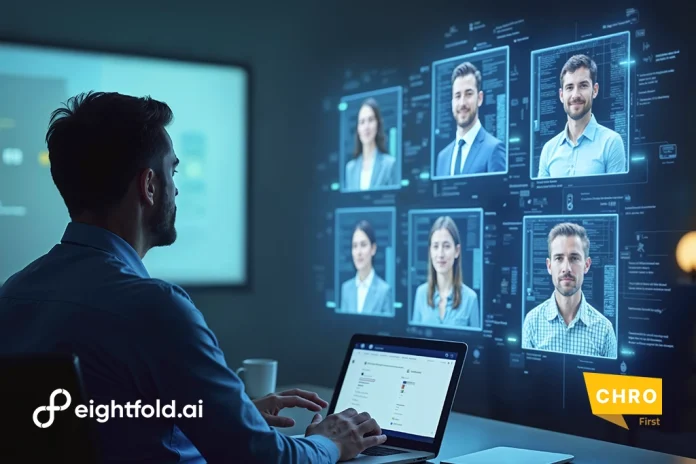
Eightfold AI unveiled an AI-powered platform called TalentForge to enable enterprises to develop customized HR applications and work-flows on top of Eightfolds talent intelligence platform. The company sees this as the start of a ‘golden age of HR software’ in which companies will no longer have to rely on rigid and inflexible one-size-fits-all HR systems but instead develop talent solutions specific to the needs of their workforce.
TalentForge is also part of a larger expansion of Eightfold’s AI native talent platform that comprises of new products like 360 Interview and Workforce Readiness. According to the company, the platform combines its large-scale talent intelligence data with agentic AI capabilities, allowing enterprises to design and deploy workforce applications more quickly without relying heavily on traditional software development cycles.
The introduction marks Eightfold’s increasing emphasis on agentic artificial intelligence, which is the term used to refer to AI systems that can perform their functions independently of human oversight and execute complex operations without having to rely on people for assistance. Ashutosh Garg, CEO, and Co-founder at Eightfold AI, says that the firm is moving away from traditional HR software solutions towards developing software applications using AI.
TalentForge is powered by Eightfold’s Talent Intelligence Platform, which relies on insights gained through analysis of 1.6 billion career paths and 1.6 million different skills to offer solutions for workforce planning, hiring, mobility management, and skills intelligence. According to Eightfold, enterprises can use the platform to build personalized HR applications to fit industry-specific operational needs instead of customizing existing processes to meet the software’s standards.
Also Read: Eightfold AI Integrates Agentic Interviewing With Oracle Fusion Cloud Recruiting
In addition to launching TalentForge, Eightfold introduced 360 Interview – a suite of AI-powered interviews consisting of coding, language, and functional assessments delivered within a single interview process. As part of its latest announcements, Eightfold launched a new Workforce Readiness tool to enable organizations to track their progress in adopting AI technology among the workforce.
Implications for the HR Industry
The introduction of TalentForge marks a significant shift within the HR technology space. Earlier HR solutions were built as rigid platforms geared toward meeting the general demands of enterprises via rigid processes and preconfigured settings. But, nowadays, numerous companies have started considering these systems to be too rigid for workforce management purposes.
With the arrival of native AI-based solutions like TalentForge, firms can build workforce solutions that fit better into their business models, recruitment procedures, and staff development practices. This is a departure from traditional enterprise software “buy and adapt” model, towards more intelligent and adaptable HR ecosystems. The emergence of agentic AI is influencing the nature of HR Technology as well.
Instead of merely being analytical or reporting tools, AI systems are beginning to be operational agents that can perform recruiting assignments, carry out assessments, coordinate flows, and synthesize actionable workforce data.
The HR function could benefit enormously from this new technology by making their jobs easier, saving them loads of time and effort by having the big automation engines doing all the repetitive and time consuming task of administration like evaluation of candidate, interview arrangement, report generation, workforce analytics, and brightening up the employee development.
The launch Same here underscores the expanding significance of skills-centric workforce management. More and more companies are moving away from stagnant job-based hierarchies toward agile organizations based on competency management, workforce adaptability, and internal mobility. Talent intelligence tools like Eightfold are here to assist.
Business Impact and Strategic Value
For businesses, TalentForge may also offer opportunities to streamline operations and glean efficiencies. Many enterprises run disparate HR systems for talent acquisition learning workforce planning, performance management and internal mobility. Custom AI-enabled solutions may enable companies to integrate these processes in one place with A lot less reliance on disparate legacy channels.
The potential for being able to create, adapt and implement HR processes and flows more quickly is potentially another benefit that strategic talent management may offer organizations: being able to adapt quickly to rapid changes in the labor market, compliance requirements, or workforce transformation programs. This benefit may be Most of all relevant for organizations with specific labor force requirements within industry sectors such as healthcare manufacturing telecommunications or financial services.
On top of that, AI-native workforce intelligence platforms should give companies more visibility into skills gaps productivity workforce readiness, and future hiring needs. The living talent intelligence could enable quicker decision-making and better future workforce planning.
Workforce Readiness is also a sign of increased enterprise anxiety about the adoption of AI. As AI becomes more prevalent in business functions, management will want to understand how employees are engaging with AI tools, where changes in productivity are happening, and which portions of the workforce need retraining or other help.
The Future of AI-Native HR Software
Eightfold’s TalentForge launch underscores a broader shift toward AI-native enterprise software ecosystems where businesses can build intelligent applications tailored to their own workflows rather than relying entirely on standardized software products.
For the HR industry, this signals a future where talent platforms become increasingly adaptive, autonomous, and interconnected with broader business operations. AI-powered HR systems may evolve from administrative tools into operational intelligence platforms capable of continuously optimizing recruitment, workforce planning, skills development, and employee engagement.
As organizations continue investing in AI-driven workforce transformation, demand is likely to grow for flexible HR platforms that combine automation, customization, and deep talent intelligence. Companies that successfully adopt these technologies may gain competitive advantages in workforce agility, talent retention, and operational scalability in an increasingly AI-driven business environment.

