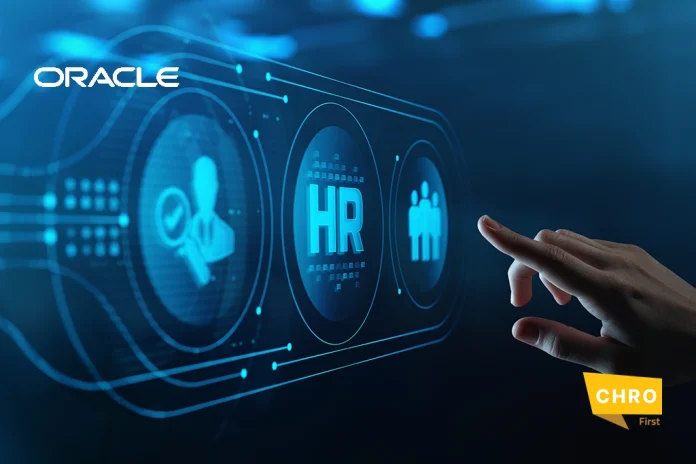
Oracle has introduced Fusion Agentic Applications for HR. This new AI-powered software aims to change how businesses manage their workforce processes. At the Oracle AI World Tour, we announced that specialized AI agents will now be part of Oracle Fusion Cloud Human Capital Management (HCM). This allows systems to reason, decide, and act on their own within HR workflows.
Fusion Agentic Applications stand apart from traditional HR systems. Rather than relying on manual coordination and scattered tools, they operate in a unified environment. They securely access enterprise data, policies, workflows, and approval hierarchies. This allows tasks to be performed in real time. These applications go beyond AI-assisted recommendations. They push work ahead, focusing on the key decisions that require human judgment.
The initial rollout includes eight HR applications focused on key workforce functions. These functions include career development, hiring, and compliance. The Career Advancement Command Center helps employees find growth opportunities and stay engaged. The Hiring Workspace for Store Managers simplifies recruitment workflows and cuts administrative costs. The Contract Compliance Workspace automates contract analysis and execution. This boosts consistency and lowers risk.
“HR leaders and managers are being asked to deliver better employee experiences, make faster decisions, and support compliance efforts, all while operating with leaner teams,” said Chris Leone, executive vice president of Applications Development at Oracle. “With our new Fusion Agentic Applications that can reason and act against defined objectives, HR leaders can reinvent key processes by shifting work from manual coordination to proactive execution.”
Also Read: Eightfold AI Expands Talent Agents to Transform the Interview Experience with AI Companion
Implications for the HR Industry
Oracle’s announcement signals a major shift in the HR technology landscape toward agentic, outcome-driven workforce management. Traditional HR systems have long functioned as systems of record, requiring significant manual effort to interpret data and execute processes.
Experiencing a shift to agentic solutions, HR has transformed from working at the human level to become an automated system that enacts decisions. AI not only has a passive role but actively controls and implements the steps, e.g. hiring employee engagement, development of careers. This way, not only does it cut down on time-consuming paperwork but it also allows HR departments to focus on leveraging their business impactful capabilities.
For those in charge of HR initiatives, this change is a cause for introducing fresh focus areas related to AI governance, understanding the workforce by data, and collaboration between humans and AI. When AI agents are given bigger pieces of work, small things made by humans, they need to make sure that the results are transparent, fair, and compliant with regulations.
Also, this transition propels the change to work on a talent management based on skills paradigm. To be able to do workforce planning and internal mobility which are the major elements of a modern HR strategy, agentic systems by constantly analyzing employee data and matching it with business needs, enable these.
Business Impact and Strategic Value
Introducing Fusion Agentic Applications for HR to a company’s workforce could be a game changer for them. These applications automate a number of routine processes which not only slash manual workloads but improve efficiency as well. Processes such as scheduling, hiring coordination, compliance tracking, etc. are the ones that these applications can handle with little to no human intervention.
What is more, being able to carry out workflows in real-time, real-time, accelerates decision-making as well. Meeting workforce needs now becomes very straightforward. That can constitute filling a role that is critical, ensuring that all compliance requirements are fully met, or training/developing workers to improve their skills.
Embedding AI within HR systems allows for a better employee experience through more customized and anticipatory interactions. Employees may become more engaged, stay at the company longer, and perform better overall.
Besides, producing agentic AI together with human workers helps organizations maintain productivity even with fewer people on their teams. That’s a big advantage in today’s business environment which is characterized by cost-consciousness and competitiveness.
Driving the Future of Intelligent HR Systems
Oracle’s Fusion Agentic Applications for HR highlight a defining trend in enterprise technology: the transition from automation to autonomous, intelligent workforce systems. As AI continues to evolve, HR platforms are becoming more proactive, integrated, and outcome-focused.
For the HR industry and businesses alike, this marks the beginning of a new era where AI is not just a support tool but a core driver of execution. Organizations that successfully adopt and govern these technologies will be better positioned to enhance workforce agility, improve productivity, and remain competitive in an increasingly AI-driven world of work.