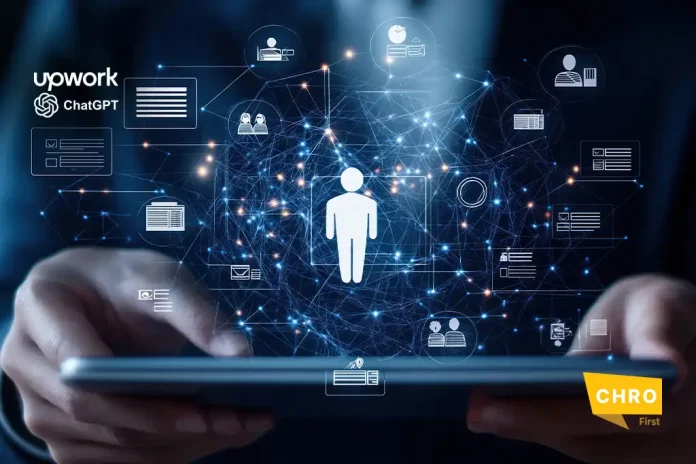
Upwork has embedded its Work Marketplace right inside ChatGPT, which is a big step towards the future of AI-assisted hiring. The updated feature means that companies can talk about their project requirements, find suitable freelancers, and even get help in writing job ads – all without switching from the chat window.
Thanks to this feature, users can simply speak to ChatGPT in their own words and the AI will help them find freelancers from a massive talent pool of up to 18 million individuals across 130+ work categories and 10,000 skills. After finalizing the need, the user is sent to Upwork’s platform where AI assistant, Uma, assists with project planning, contract creation, and work kick-off.
This is just one of the many examples of conversational work orchestration which is a growing trend, where AI platforms play the role of facilitators connecting business needs and their execution. Instead of spending time checking different job boards or recruitment platforms, companies can now trigger hiring processes through basic conversations – the whole process becomes much simpler.
Implications for the HR Industry
With the integration of ChatGPT into Upwork, there is a significant move towards a new paradigm of AI-first HR technology, with chatbots replacing traditional methods of recruitment. These include job listings, keyword searches, and even interviews.
From the perspective of an HR professional, it means that hiring should start from intentions, not processes anymore. With the implementation of the ability to discover jobs through conversations, an organization can realize its need for particular talent faster and reach potential candidates effectively without using only job listing websites.
On-demand hiring is another area where the introduction of AI-based services changes the rules dramatically. The use of freelance workforce becomes more frequent due to the fast development of such platforms. This will make organizations shift from conventional hiring practices towards more flexible strategies of recruiting people.
Finally, this integration may significantly influence HRs’ hiring practices. Chatbots used for the process can provide additional data about candidates that can help make the decision in favor of one candidate over another.
Business Impact and Strategic Value
In business environments, the solution enables firms to get in touch with talent faster and in a more efficient manner. By making the process simpler, companies can cut time spent recruiting and hiring freelancers.
In addition, the chatbot approach makes things easier for small-scale firms which might not have human resources departments. Managers and entrepreneurs can tell the bot about what they need, and get recommendations for relevant talents.
Additionally, having an easier transition from ideation to execution in one interface improves business efficiency and productivity. Instead of wasting time, firms will be able to go through the entire process – from defining a project to hiring talent.
Finally, there is an increasing interest in hybrid work models which involve collaboration between humans and AI. In such setups, human professionals take care of valuable tasks after AI completes the scope analysis and match-making task.
Shaping the Future of Work and Hiring
The launch of Upwork’s marketplace within ChatGPT highlights a broader transformation in how work is discovered, managed, and executed. As AI platforms become central to business workflows, hiring is evolving from a standalone process into an integrated, conversational experience.
For the HR industry and businesses alike, this marks the emergence of a new hiring paradigm—one where AI not only assists but actively orchestrates talent acquisition. Organizations that embrace these innovations will be better positioned to access global talent, improve agility, and compete in an increasingly dynamic, AI-driven economy.

