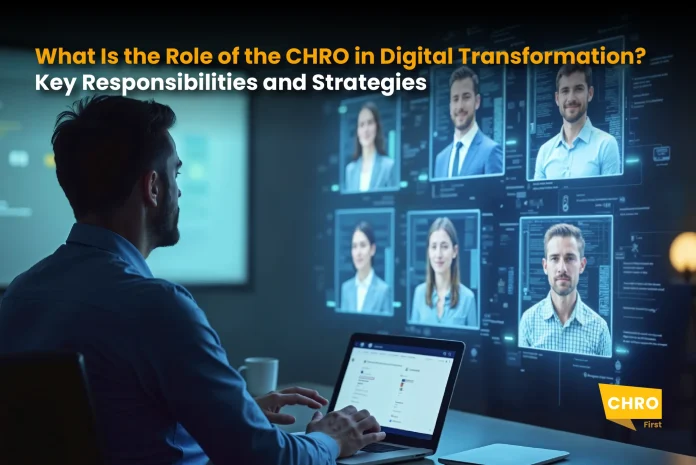
What if your company has adopted new technology but your employees aren’t prepared to embrace it? No matter how sophisticated a technology is, if you don’t have the right people to learn to apply it differently, your plans will falter.
In order to bring about digital transformation, the CHRO should make sure that there is alignment between organizational strategy and workforce strategy, and that employees are enabled to work differently by means of technology. The CHRO works with business and technology leaders to understand skill gaps, accelerate change and safeguard employee trust.
In this article, the CHRO’s strategic role in reskilling, HR tech, change management, employee experience and workforce analytics.
The Evolution of the CHRO in the Digital Age
Through all time, HR was quantitatively measured by its proficiency in dealing with such functions as payroll management, compliance, recruitment, and personnel file keeping. Although all these functions remain crucial, they are just one side of the coin today. In the era of AI implementation, automation, and redesign of work, HR can take a part in proving that the workforce is ready for the transformation and producing results at that.
That means the way talent decisions are initiated is transforming. According to LinkedIn’s Future of Talent Report 2026, 81% of talent leaders say that those that have a thriving talent function begin with the business goal in mind and not a hiring mandate. The takeaway. The CHRO should know where the business is going, what competencies are required, and how to leverage the existing workforce to fill the skill gaps. Digitalization has increased workforce strategy to the same level of importance as business strategy.
Core Responsibilities of the CHRO in Digital Transformation
Aligning Workforce Strategy with Business Goals
Every technology buying decision addresses a business challenge. When a business is looking to enter new markets, deliver a great customer experience or automate its operations, the CHRO needs to be asking questions about the employee capability and capacity to deliver those ambitions. That requires working collaboratively with the CEO, CIO and the other business leaders much before the transformation decision has been made.
Workforce planning must consider more than current hiring trends. According to the report, 50% of the surveyed leaders anticipated talent availability to increase, 30% expected a worsening. But talent shortages will continue to be an important issue as skills gaps tend to persist even when talent is broadly available. It’s a good position for the CHRO to be in, as he or she is able to pinpoint the capabilities that will be needed, where those capabilities can be found among employees who can be trained, and where the assets should be expanded through new hiring.
Integrating HR Technology and Automation
Legacy human resources technologies tend to cause conflict in terms of siloed data, manual approvals, and tedious administrative tasks. This takes away the time that HR should spend on more important things, such as workforce planning, employee development, and support to their leaders. The CHRO must identify ways in which technology can be used to make life easier for the employees and HR professionals.
The technology can also serve to automate some of the processes such as payroll, compliance, leave requests, queries and so on. It can also provide employees with the relevant information and aid managers to make the appropriate decisions. However, it is not enough to purchase new software to gain all of the above benefits. The CHRO should collaborate with IT specialists in order to determine what needs to be done in terms of business requirements, data security and integration, as well as preparing employees to use new tools.
Cultivating a Culture of Innovation
Digital transformation changes how people work, make decisions, and respond to uncertainty. Employees may hesitate to adopt unfamiliar tools if they fear making mistakes, losing control over their work, or being judged for results during the learning process. The CHRO must help create an environment where people can experiment, share feedback, and adapt without fearing unfair consequences.
This starts with leadership behavior. Managers should push people to experiment, to talk about what doesn’t work and to learn from different teams. The CHRO can enable this with experimentation at the team level, cross-team collaboration and reward for good ideas, not just success. Learning must also be practiced through actual application of skills.
But an internal message isn’t enough for a culture of innovation. Leaders must be open to healthy challenge and be seen to have acted on it. If staff know they can question how things are done and come up with improvements, then digital becomes an everyday experience, rather than a mandate from the top.
Bridging the Digital Skills Gap Through Reskilling and Upskilling
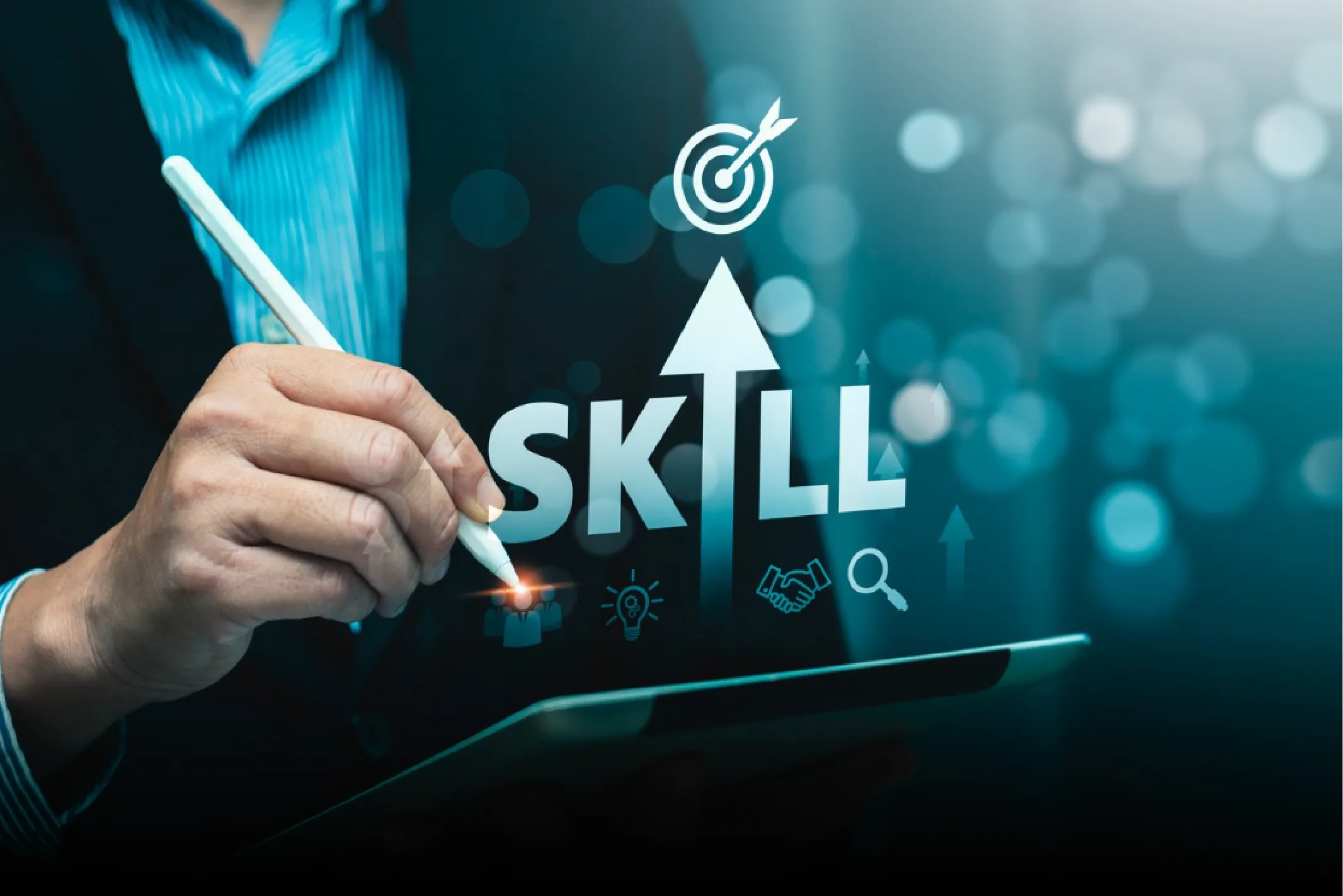
The way in which technology is employed to do the work can be transformed, but individuals must have the skills to do this. That involves collaborating with business and technology leaders to work out the skills the business will need when AI, machine learning, and data-informed decision-making are mainstream. Map the skills your business already has, identify where you need to grow, and envision where roles may move.
Training should be more than a series of one-offs. The CHRO must create sustainable education routes of the types of courses, projects, coaching and application of skills to real business issues. Employees should know where opportunities for learning can be made available, but also how learning will lead to advancement in their careers. Seeing how digital skills can provide new courses of action creates a stronger incentive for transformation.
Also Read: How to Measure the ROI of HR Technology Investments: Key Metrics and Strategies for HR Leaders
Access to training is another challenge. The report found that 16% of workers received training in the preceding year, compared with 51% of full-time permanent workers in formal firms. This points to unequal access to learning and development. It also shows why reskilling programme must be inclusive across roles and arrangements of employment, and not just targeted at those already in a position to benefit.
Workers are concerned about the way that technology might put their jobs in danger. The CHRO must help them see the benefits with transparency, training and advancement opportunities, so employees feel less apprehensive about testing out new technologies. The goal should be to turn upskilling into a routine on the job – supporting employees to evolve as roles change.
Leading Change Management and Overcoming Resistance
Digital transformation can cause can send employees into a spiral of confusion well before they gain any practical value. New systems and processes can disrupt well-worn routines and different. Sometimes the allocation of responsibilities is unexpected. The CHRO has to rush to find out the justification for change, its implications on roles and careers and people.
Change communication must articulate the logic for the change, not just the new process or method. This type of change message will be more effective if it demonstrates how the technology will improve their work and which problem it is trying to fix. The CHRO must provide a forum for employee feedback and questions.
That’s where managers come in. Middle managers are often the ones implementing strategy. But they aren’t always equipped or comfortable guiding employees through unknown territory, coaching them along the way. The chief human resources officer can help the middle managers coach employees through the learning and resistance, and speed up the trial-and-error process. Distributed and hybrid teams deserve special focus, as communication is not uniform.
Reward matters, as well. Almost half (45%) of respondents in one survey agreed that it was safer to worry about existing priorities rather than rethink work with AI. Just 13% said they were rewarded for rethinking work with AI, even without the results materializing. That’s a real challenge, to be sure: if employees don’t think they’re safe to experiment, they won’t. Change management in this area isn’t about reconciling metrics and workplace signals, but rather creating space to experiment thoughtfully, catching good learning, and managing expectations of what the upcoming change will demand.
Enhancing the Employee Experience Through Technology
Employees demand that technology in the workplace should be just as easy as the technology they are accustomed to using in their personal lives. Complex technology, slow approvals and cumbersome process for getting information could lead to unnecessary frustration. The CHRO will ensure that technology makes everything simple and easier for employees.
ESS portals may enable employees to pay for views, estimate pay slips, or update personal data without any manual intervention. Communication IT should enable communication in a hybrid team, and AI-powered HR helpdesk can efficiently handle queries from employees.
The ease of technology should also come with assurance. When it comes to technologies such as AI in recruiting and performance evaluations, there should be proper control mechanisms to detect any form of discrimination. Employees should be aware of the workings of the technology and have a way of questioning its decisions.
Leveraging Workforce Data and Analytics

The CHRO needs to be able to see the numbers behind this to spot trouble ahead of when it negatively affects the business. With predictive analytics and dashboards for real-time insights, it is now possible to gauge the rate of technological adoption as well as identify those at risk and measure whether training programs are preparing the workforces with the necessary skills required.
Such data will enable HR leaders to anticipate future impacts on the workforce. There is an increasing urgency to gain this visibility as AI adoption begins to accelerate. According to LinkedIn’s June 2026 C-suite research, 78% of the C-suite said they were moving faster on AI than they could accurately track.
Conclusion
People should be effectively enabled, empowered and engaged to work alongside new technology. The CHRO can support the business in bringing the workforce along your digital journey, driving the change and using technology to improve how work gets done. However, this is too much for one function alone.
Organizations need to provide CHROs with the investment, sponsoring executives and a seat at the decision table with business and technology executives to transform with confidence. When companies bring HR early into the planning of the digital transformation, they will be better at developing a workforce that can adapt and learn to deliver sustained value.