
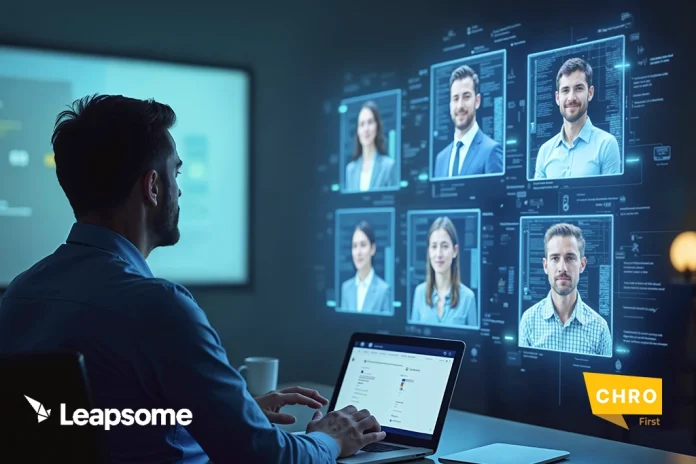
The corporate human resources space is caught in a costly operational loop. For years, organizations have patched together fragmented point solutions using one vendor for recruitment, another for payroll, and standalone tools for performance tracking, engagement surveys, and learning management.
This disconnected setup creates severe data blind spots. When a standalone Applicant Tracking System (ATS) captures a rich candidate profile but completely forgets that history the second the person is hired, it breaks the talent development cycle. The generic AI assistants tacked onto these isolated systems are only as good as the fragmented data they receive. The result is a sluggish, reactive environment where talent metrics take days to compile and high-performing employees burn out un-monitored.
To completely close this operational gap and build a unified strategic system, intelligent people platform pioneer Leapsome announced the launch of an industry-first: context-aware AI explicitly built to maximize corporate talent density.
Anchored by the release of its new, natively embedded ATS, Leapsome becomes the sole HR ecosystem that unifies every node of the employee lifecycle spanning hiring, onboarding, core HRIS, goals, performance, learning, and compensation into a single, highly integrated data repository. For the HR Technology, People Operations Platforms, and Corporate Talent Management industry, this launch marks a defining transition: shifting HR away from passive administrative record-keeping and moving it into automated, predictive talent development.
Also Read: University of Phoenix and OpenAI Partner to Bridge the Enterprise AI Fluency Gap
Technical Performance: Lifecycle Automation and Data-Grounded AI Agents
The core breakthrough driving Leapsome’s platform expansion is the deliberate creation of a deep, unified data fabric. Instead of treating hiring context, performance scores, and salary adjustments as separate variables, the software links these points into a continuous intelligence pipeline.
The integrated architecture optimizes talent density across several sophisticated vectors:
AI-Generated Lifecycle Workflows: HR teams can design complex talent automations across the full employee timeline using simple, plain-language prompts. The engine constructs personalized onboarding programs and skill-aligned learning paths drawn directly from internal enterprise documents.
Grounded Competency Frameworks: The platform analyzes historical performance data from the company’s top performers to automatically build localized competency baselines. This ensures that promotion bars and role expectations reflect actual, measurable business impact rather than abstract templates.
Universal Model Connectivity: Built to securely leverage advanced foundation models, the infrastructure incorporates multi-cloud model connectivity alongside secure AI agents that automatically handle core administrative tasks.
Rigorous Privacy Guardrails: To protect highly sensitive employee records, the platform features robust security governance. It operates with full EU AI Act compliance, GDPR adherence, ISO 27001 certification, and secure European hosting.
Transforming the HR Tech and People Operations Industry
The structural integration of full-stack talent workflows straight into a single data fabric alters standard competitive parameters across the workforce technology vendor market.
The Death of Fragmented HR Point Solutions
For over a decade, the HR technology sector thrived on specialization independent vendors commanded premium margins by managing isolated feature domains like niche recruiting boards, standalone survey trackers, or independent 360-review tools.
Leapsome‘s platform consolidation signals the end of this fragmentation. When organizations are forced to operate leaner, maintaining separate data silos is a massive strategic disadvantage. The vendor ecosystem is entering a rapid consolidation wave; systems will no longer be judged by their features alone, but by their capacity to act as a single source of truth across the full employee lifecycle.
Elevating the Strategic Mandate of Chief People Officers
Historically, enterprise technology architectures treated the HR database as a defensive cost center a ledger designed to store documents, track basic leaves, and protect companies from compliance friction.
By feeding unified lifecycle records into predictive AI agents, the platform fundamentally changes this dynamic. HR leaders gain access to the same grade of real-time analytical visibility that commercial and finance teams have used for years. This shifts the long-term HR tech baseline out of back-office clerical operations, empowering People Ops teams to function as strategic organizational designers who actively optimize talent composition and output.
Broad Operational Impact on Enterprise Businesses
For corporate entities looking to maximize output without exponentially expanding their headcounts, deploying a unified talent density framework yields distinct commercial advantages.
Insulating Corporate Margins from Executive and Staff Attrition
When a business lacks unified visibility into how hiring source, manager feedback, and salary progress correlate with employee morale, high-performing contributors slip away unnoticed. Replacing an elite engineer or a critical leader introduces a heavy financial tax including direct recruiting expenses, lengthy onboarding lag, and deep losses in team velocity.
Transitioning to an active, data-grounded intelligence layer allows enterprise managers to receive contextual nudges the moment an employee’s performance or engagement trends dip. This allows leaders to address culture risks and adjust development paths before issues turn into structural turnover, protecting net operating margins.
Multiplying Team Capacity by Autopiloting Corporate Toil
HR departments and operational managers are routinely buried under an immense burden of repetitive clerical paperwork spending hours hand-crafting standard policy documents, managing manual reviews, and manually building reporting graphs for board presentations. Offloading these administrative tasks onto context-aware digital agents frees up immense internal capacity.
People operations specialists can step away from manual database troubleshooting and redirect their full attention toward high-value, strategic human priorities including designing long-term leadership successions, fostering cross-functional alignment, and refining workplace culture turning operational technology into a confident engine of enterprise scaling and long-term market advantage.

