Not too long ago, companies could get away with running a few annual training sessions, ticking a compliance box, and calling it employee development. That model is falling apart.
Markets change faster than planning cycles. AI tools become outdated in months. Entire job roles evolve before teams have fully settled into them. The real problem is not that technology is moving quickly. It is that people and organizations are still trying to learn at yesterday’s pace.
A learning and development strategy is simply a structured way for an organization to build employee capabilities while keeping those capabilities tied to business goals. At its best, it is not about training people for the sake of training them. It is about making sure the workforce evolves at the same speed as the business itself.
The conversation has shifted because the risk has shifted. According to the World Economic Forum, employers expect 39% of workers’ core skills to change by 2030. That number alone explains why old-school corporate training is no longer enough. The challenge now is not delivering more courses. It is creating an environment where learning never really stops.
What Actually Makes a Learning and Development Strategy Work
A lot of organizations still start from the wrong place.
Someone buys a learning platform. HR creates a calendar. Employees are assigned courses. Managers receive a completion report. Everybody feels productive, but nothing inside the business really changes.
The missing piece is alignment.
A learning and development strategy really should start from the business goals, not from the training catalog, or whatever folder is used. If the company wants to lower customer churn, lift product quality, speed up delivery cycles, or grow sales performance then the learning efforts need to align with those outcomes, right from the beginning.
It sounds almost too obvious, yet plenty of organizations still split learning from day to day operations. It becomes like, one group keeps thinking about revenue while a different group keeps thinking about development. The two conversations rarely meet.
The better approach is to map capability gaps directly against business goals. If customer complaints are rising, maybe service teams need stronger communication skills. If product launches are slowing down, perhaps project leaders need better cross-functional collaboration. Learning becomes much easier to justify when people can see the operational problem it is trying to solve.
Ownership also has to change.
For years, companies handed the entire responsibility to HR departments. That made sense when learning mostly meant organizing workshops and managing training budgets. It makes far less sense today.
Technology is reshaping almost every function inside an organization. Department leaders are often the first to notice those shifts because they deal with them every day. They know which skills are disappearing and which ones are becoming essential.
Gartner says that 85% of business leaders expect AI and digital trends to drive a major surge in skill needs within the next three years. If that is the reality, then workforce development cannot sit inside one department. It has to become part of leadership itself.
HR should still build the framework, but business leaders need to own the capability agenda. Otherwise, learning stays disconnected from the work that actually matters.
Also Read: Employee Value Proposition (EVP) in 2026: How Strong Employer Branding Drives Talent Attraction and Retention
Why the 70:20:10 Model Still Makes Sense
There is a strange habit inside organizations. They assume that because somebody attended a course, they learned something.
Most people know that is not how life works.
Nobody becomes a good manager after watching a presentation. Nobody becomes a better salesperson because they completed an online module. Skills grow when people use them, struggle with them, fail a little, and then try again.
That is why the 70:20:10 framework continues to survive while so many workplace trends come and go.
The idea is simple. Around 70% of learning comes from doing the work itself. Another 20% comes from working with other people. The remaining 10% comes from formal education.
The first part is usually where companies fall short.
Employees finish a training session and then go back to exactly the same routine they had before. Nothing changes because the organization never created opportunities to apply the knowledge.
Real experiential learning looks different. It comes through stretch assignments, cross-functional projects, temporary leadership roles, shadowing senior employees, and solving actual business problems.
The workforce itself is asking for this kind of development. Deloitte found that 94% of Gen Z employees and 97% of millennials value hands-on experience over theory.
That should not be surprising.
People remember what they do. They forget most of what they hear.
The next layer is collaborative learning.
Hybrid work kind of changed how teams communicate, but it didn’t really diminish the value of mentorship either. If anything it made deliberate knowledge exchange more important, because otherwise people might feel isolated. Internal communities, peer review sessions, mentoring programs, and those kind of casual troubleshooting groups, help employees grab practical know how that a textbook can’t really hand over.
Formal learning still counts, but the part it plays is different now. Courses and certifications should really back up the actual job, not sort of go on and replace it. A short, focused learning module delivered right at the right moment, it can end up creating more value than some long training program wrapped up six months before someone even finally needs that particular skill.
The Technology Behind Modern Learning
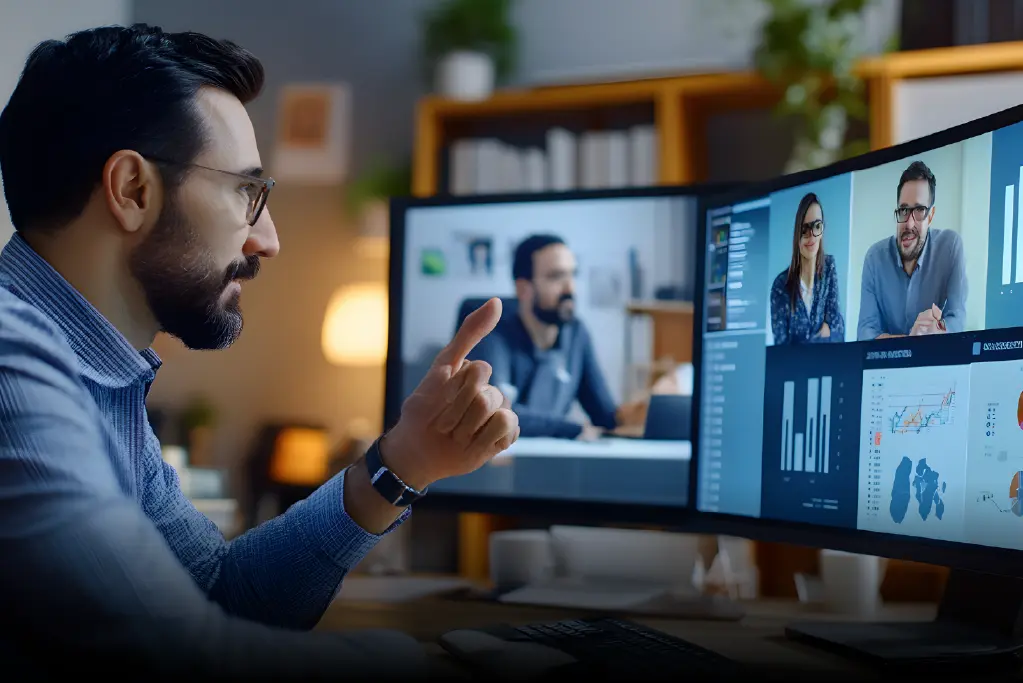
For years, the Learning Management System was treated like the center of the learning universe.
Employees logged in, completed mandatory courses, downloaded a certificate, and logged out. The system recorded activity, but it rarely became part of everyday work.
That model is slowly giving way to something more practical.
Learning Experience Platforms and intelligent learning systems are designed around the idea that people should not have to stop working to learn. The learning should arrive inside the workflow.
A project manager dealing with a new AI tool does not necessarily need a twenty-hour course. They might need a ten-minute learning block that solves today’s problem. A sales executive preparing for a complex negotiation may only need a targeted resource before the client meeting.
That is where just-in-time learning becomes valuable.
The scale of this shift is already visible. Google says that Google Skills now brings together nearly 3,000 courses and labs, and learners completed more than 26 million courses, labs, and credentials in the last year.
People are not rejecting learning. They are rejecting friction.
The easier it becomes to access useful knowledge; the more likely employees are to build learning into their daily habits.
Stop Measuring Activity and Start Measuring Change

Corporate learning has a measurement problem.
Many organizations talk proudly about training hours, completion rates and certificates earned. The numbers look impressive in a quarterly report, but they don’t always say anything real about whether employees are getting better at their jobs.
A company can show a 95% course completion rate and still end up with weak customer service, projects that drag out, or even high employee churn.
The question that matters is different.
Did learning change behaviour?
Are teams making fewer mistakes? Are new employees becoming productive faster? Are projects moving with fewer delays? Are people staying longer because they feel they are growing?
Frameworks like the Kirkpatrick Model push organizations to think beyond participation and look at actual outcomes.
The disconnect between leadership and employees also tells an important story.
PwC found that only 51% of non-managers feel they have the learning and development resources they need, while 72% of senior executives believe those resources exist.
That gap should make leaders uncomfortable.
It suggests many organizations are measuring what they deliver instead of measuring what employees actually experience.
The future of learning will not belong to the companies that produce the most content. It will belong to the ones that make learning genuinely useful.
The Road Ahead
A lot of organizations still think disruption is the main thing, like ok, that’s the problem.
But no, it is not.
The difficult part is actually how slowly many businesses adapt after they realize disruption is in motion, kind of already happening.
A learning and development strategy is getting less about HR and more about surviving. The companies that weave learning into normal day to day work will keep spotting fresh opportunities, because their people can keep shifting with the market. While the ones that treat upskilling as a once a year event, you know, an annual initiative, they’ll likely spend the next few years chasing fires and reacting to trouble they could have sorted before.
The smartest investment is no longer another piece of software or another management framework.
It is a workforce that knows how to learn before it is forced to.