For years, blockchain carried this reputation, a technology kind of built around cryptocurrency speculation. And in 2026, that whole perception is starting to shift, bit by bit. The talk is drifting away from digital coins and more toward the actual stuff businesses deal with every single day, trust.
Modern workplaces are no longer trapped by office walls, not really. Remote teams, global hiring, cross-border payroll, and those digital employee journeys have turned into a larger problem for HR leaders. So the question becomes, how do you verify people, protect sensitive records, and still move faster without breaking trust in the process?
This is where blockchain in HR is getting attention, like it’s suddenly not just a buzzword. The tech is turning into a base layer for secure credential verification, more transparent payroll systems, tamper-proof employee records, and stronger workforce data privacy. In this article, we look at how decentralized models are reshaping HR operations, the places where they actually create value, and why adoption will lean less on the technology itself, and more on solving practical, everyday workforce problems.
What Does Blockchain Mean for HR in 2026?
In HR, blockchain is basically the use of a decentralized, unchangeable digital ledger to securely check, keep, and organize employee related data. Rather than depending only on centralized databases it lets trusted records get shared, verified, and updated across approved networks. This can feel a bit like having one stubborn proof trail that many parties can rely on, without one single system being the only gatekeeper or organizer.
Traditional HR systems were designed for a different workplace era. Employee information usually sits inside centralized platforms controlled by one organization. While these systems have improved over time, they still create challenges around verification, security, and data ownership.
Blockchain changes the model. Instead of asking companies to repeatedly verify the same information, employees can carry trusted digital records that can be verified whenever needed. A candidate can prove a qualification. An employee can verify certifications. A company can confirm identity without rebuilding the entire verification process from scratch.
Microsoft’s 2026 Entra Verified ID documentation explains that its verifiable credential solution uses decentralized credentials and decentralized identifiers, allowing organizations to issue verified credentials while individuals store and present them when required.
The important shift is not about replacing every HR system overnight. The real opportunity is removing friction from processes that waste time, create uncertainty, and increase administrative workload.
Revolutionizing Hiring Through Secure Credential Verification
Hiring has always depended on trust, like the whole thing relies on it. A resume tells a story but HR teams still need to confirm that what’s written is true, whether it’s actually accurate. Degrees, certifications, employment history and professional achievements often need manual checks which slow down recruitment in a way that’s hard to notice until you’re in it.
Then it gets kind of more complicated when companies hire globally. Different education systems, regional verification routines, and broken up records make background checks costlier, and more time consuming. For candidates the process can feel repetitive, because they end up resubmitting the same proof more than once across their careers, sometimes over and over, like it never really ‘sticks.’
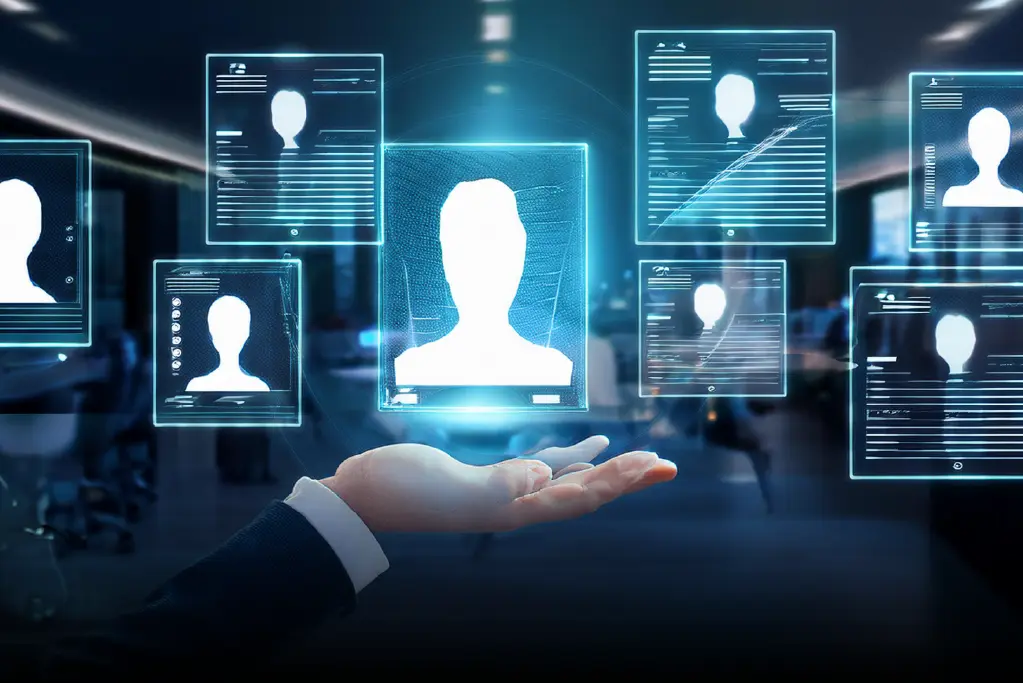
Blockchain in HR introduces a different approach through concepts like self-sovereign identity and digital credential wallets. Instead of organizations storing every piece of employee information themselves, individuals can own verified digital records and share only what is required.
Imagine a candidate having a digital “value passport” containing verified degrees, certifications, and work history. When applying for a role, the candidate does not need to wait weeks while multiple institutions confirm details. The employer can verify the authenticity of the information through a trusted digital record.
W3C’s 2026 Verifiable Credentials Overview explains that verifiable credentials contain claims and metadata with verification mechanisms that cryptographically prove who issued them and help ensure the information has not been altered.
This creates a major advantage for both sides. Companies reduce verification delays, while employees gain more control over their professional identity.
The bigger impact is not only faster hiring. It is a shift in ownership. Today, organizations often control employee records. Blockchain-based credential systems move toward a model where individuals can carry verified proof of their skills throughout their careers.
For HR teams, this means onboarding becomes smoother, background checks become more reliable, and trust becomes built into the hiring process instead of added after the fact.
Also Read: HR Risk Management in 2026: How to Identify, Assess, and Mitigate Workforce Risks
Transparent Payroll Processes Through Smart Contracts
Payroll looks simple from the employee’s perspective. Work gets completed, and payment arrives. Behind the scenes, global payroll is one of the most complicated, HR operations really. Companies managing international teams deal with different currencies, compliance requirements, payment delays, banking processes, and then third-party systems too. All these problems become even more visible as organizations lean on distributed workforces.
Blockchain in HR can help build a more transparent payroll ecosystem, with smart contracts. Smart contracts are digital agreements that auto run actions once the predefined conditions are met, no manual chasing needed or anything like that.
So for example, a smart contract could trigger a payment once certain verified conditions are completed. like approved working hours, project milestones, or contractual obligations being in place and actually confirmed, without the usual back and forth. Instead of multiple systems communicating and waiting for manual approval, the process becomes faster and more traceable.
Oracle’s OCI Blockchain Platform is a managed blockchain service designed for running smart contracts and maintaining a tamper-proof distributed ledger using Hyperledger Fabric.
The value here is not automation alone. Traditional automation still depends on databases and systems that may require reconciliation. Blockchain adds another layer by creating a trusted record of transactions and agreements.
This could become especially useful for multinational organizations managing contractors, remote employees, and cross-border teams. Blockchain-based corporate payment systems could potentially reduce dependency on multiple intermediaries and improve visibility into financial transactions.
However, HR leaders should avoid viewing smart contracts as a complete payroll replacement. Payroll involves tax regulations, employee benefits, compliance rules, and local laws. Blockchain works best as a trust and verification layer that improves existing processes.
The future of payroll will likely not be about choosing between traditional systems and blockchain. It will be about combining both to create faster, more transparent employee payment experiences.
Tamper-Proof Employee Records and Enhanced Data Privacy
HR departments hold some of the most sensitive information inside an organization. Employee identities, compensation details, performance reviews, personal documents, and career histories all require strong protection.
This makes HR systems attractive targets for cyberattacks. A single compromised database can expose years of employee information.
Blockchain in HR offers a different approach by reducing dependence on one central storage point. Instead of creating a large collection of sensitive information in one location, decentralized models distribute verification across trusted networks.
The goal is not simply storing more data. It is creating better control over how employee information is accessed, verified, and shared.
Consider the employee lifecycle. Hiring creates one set of records. Promotions create another. Training certifications, performance reviews, and role changes continue adding new information over time.
A blockchain-based employee record system can create a reliable history of these events. Each update can be verified, creating a transparent timeline that reduces disputes and improves accountability.
Deloitte’s 2026 Global Human Capital Trends survey covered more than 9,000 business and HR leaders across 89 countries, and 7 in 10 leaders said speed and adaptability are central to competitiveness.
That pressure explains why HR teams are looking beyond traditional processes. Faster workforce decisions require trusted information. Whether it is confirming skills, reviewing employee history, or managing access permissions, data accuracy directly affects business agility.
Blockchain also supports stronger privacy models when combined with proper governance. Employees can have greater visibility into how their information is used, while organizations can maintain stronger control over verification processes.
The future HR challenge is not collecting more employee data. Most companies already have plenty. The challenge is making that data trustworthy, secure, and useful.
Challenges to Adoption and How HR Leaders Can Respond
Despite the potential, blockchain adoption in HR will not happen without challenges.
The first hurdle is integration. Most organizations already depend on established HR platforms such as Workday and SAP. Replacing these systems completely is unrealistic. Blockchain solutions will need to connect with existing HR infrastructure rather than operate separately.
The second challenge is compliance. Blockchain’s biggest strength is also one of its biggest concerns. Information stored on a blockchain is designed to be difficult to change. However, regulations such as GDPR include requirements around data modification and the right to be forgotten.
This is why hybrid approaches are becoming more practical. Companies can store sensitive information off-chain while keeping verification records on-chain. This approach balances transparency with privacy requirements.
The winners in blockchain in HR will not be companies that adopt the technology fastest. They will be companies that understand where trust gaps exist and apply blockchain only where it creates measurable value.
Conclusion and Next Steps for HR Leaders
Blockchain in HR is not about replacing HR teams or creating futuristic systems for the sake of innovation. Its real value lies in fixing everyday trust problems across hiring, payroll, and employee data management.
The biggest opportunity is giving organizations and employees a more reliable way to verify information without unnecessary delays. The World Economic Forum’s March 2026 digital government article says more than 100 countries have implemented some form of digital ID, showing that trusted digital identity systems are moving closer to mainstream adoption.
HR leaders should start small. Audit the processes that drink up the most verification time, create the most errors, or slow down employee experiences, kind of across the board. Blockchain may not solve every HR challenge, but when the problems are built around trust, verification, and transparency, it could become a critical backbone for the future workforce.