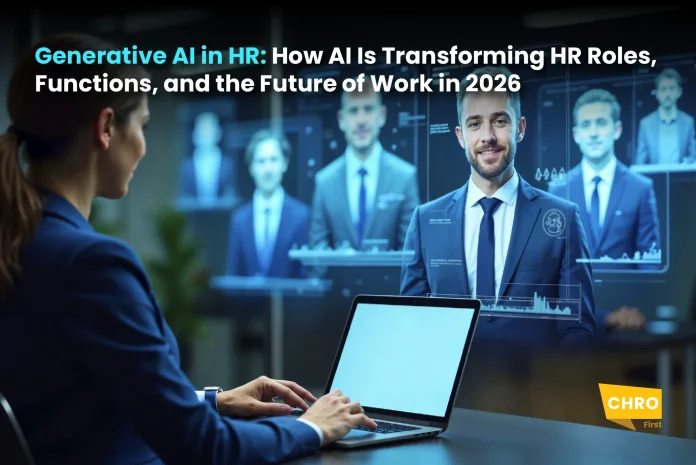
HR has spent years trying to become more strategic. Generative AI may finally force that shift, but not in the way many technology pitches suggest. The real change is not that machines understand people. They do not. The change is that machines can absorb a growing share of the repetitive work that keeps HR teams buried in administration, leaving more room for judgment, coaching, workforce planning and culture.
The ILO’s June 1, 2026 research says GenAI productivity gains are real but uneven, while large-scale job displacement remains limited. Work organization, worker autonomy and job quality are changing. That tension defines the opportunity for HR. AI tools in HR can work with data at a large scale. Still, people have to deal with the bigger picture. They also have to build trust and make hard calls. This piece shows where that change is starting. It also covers what HR staff should learn next.
What Generative AI Means for HR?

Generative AI is not one thing in HR, and trying to compare one technology to another is futile. Predictive AI reviews data from the past and identifies patterns related to future events like retention issues or changes in employee numbers while generative AI adds data and forms new texts or converts data into easier-to-understand formats. It can draft policies, summarize employee feedback, simulate roles and help HR teams prepare communication.
Agentic AI goes a step further. Instead of only generating an answer, it can carry out connected tasks across a workflow. That distinction matters in generative AI in HR. The system handles routine coordination while HR focuses on exceptions, sensitive conversations and the human experience of joining an organization. The future of HR will involve all three, with different levels of human control.
Redefining the Core HR Functions
Talent Acquisition and Hyper-Personalized Onboarding
Recruiting is typically regarded as one of the obvious AI accomplishments. However, it may be of greater significance to consider whether AI enables personnel to develop an improved recruitment process while preserving the impact of humans on the final choice.
Generative AI in human resources can assist in preparation of role specifications and customizing contact with candidates, it can also facilitate management of a vast amount of information on the candidates. Generative AI might also be able to summarize principle candidates’ reactions to different interview processes and evaluations, which gives recruiters clarity over what works and what repeats. That can reduce the manual work around hiring while keeping the final assessment with people.
Onboarding is where agentic AI becomes more tangible. AWS demonstrates AI-powered onboarding agents that can handle new-hire questions, policy and benefits information, compliance tracking, tickets and workflow actions such as notifications. That points to a useful model for generative AI in HR. The system handles routine coordination while HR focuses on exceptions, sensitive conversations and the human experience of joining an organization.
Continuous Learning, Upskilling and Career Pathways
The old learning model was built around courses. Employees were assigned modules, completed them and moved on. That model struggles when the skills required for a role can change faster than the annual training cycle.
More than one in three young workers globally are in occupations with medium to high exposure to AI-driven task change, according to the WEF. WEF also says AI is reshaping how companies hire, develop and advance talent. That makes continuous learning less of an HR benefit and more of a workforce strategy.
Generative AI in HR can help move learning from a fixed library to a more adaptive system. It can turn business priorities into learning paths, explain difficult concepts in simpler language and create role-specific practice exercises. It can also help identify skills gaps by connecting employee capabilities with changing business needs. The real value is not more training. It is better timing, better relevance and a clearer connection between learning and career movement.
Also Read: How to Align HR Strategy With Business Goals: A Practical Guide for HR Leaders in 2026
Employee Experience, Engagement and Real-Time Support
Employees rarely want another form to fill out when they have a simple HR question. They want an answer. A conversational HR assistant can provide policy and benefits clarification around the clock, reducing the routine questions that consume HR team’s time.
That does not mean every employee interaction should become a chatbot conversation. Sensitive issues such as conflict, performance concerns, workplace complaints or major career decisions need human attention. The useful role for generative AI in HR is to create a first layer of support, not a wall between employees and HR.
It can also help employees navigate complex information. Instead of searching through long policy documents, a worker could ask a direct question and receive a concise explanation based on approved company information. HR then gets more time to focus on the conversations where empathy, context and judgment actually matter.
Predictive Workforce Analytics and Strategic Decision-Making
HR has no shortage of data. The harder problem is making sense of it. Engagement surveys, exit interviews, employee comments and open-ended feedback can contain valuable signals, but they are difficult to review at scale.
Generative AI for HR can take messy notes and find patterns in them. It can also pull out repeated topics that HR teams care about. If HR uses it well, it may link how staff feel to bigger workforce issues. For example, it can point to where engagement is slipping. It can show which problems keep coming up. It can also flag the topics that need a closer look.
The important distinction is that AI should support the decision, not quietly become the decision-maker. Predictive systems may estimate a trend, while generative systems can help explain and organize the information around it. HR leaders still need to test the context, question the assumptions and decide what action makes sense. That is where strategic HR earns its value.
The Evolution of HR Roles from Administrator to Value Architect
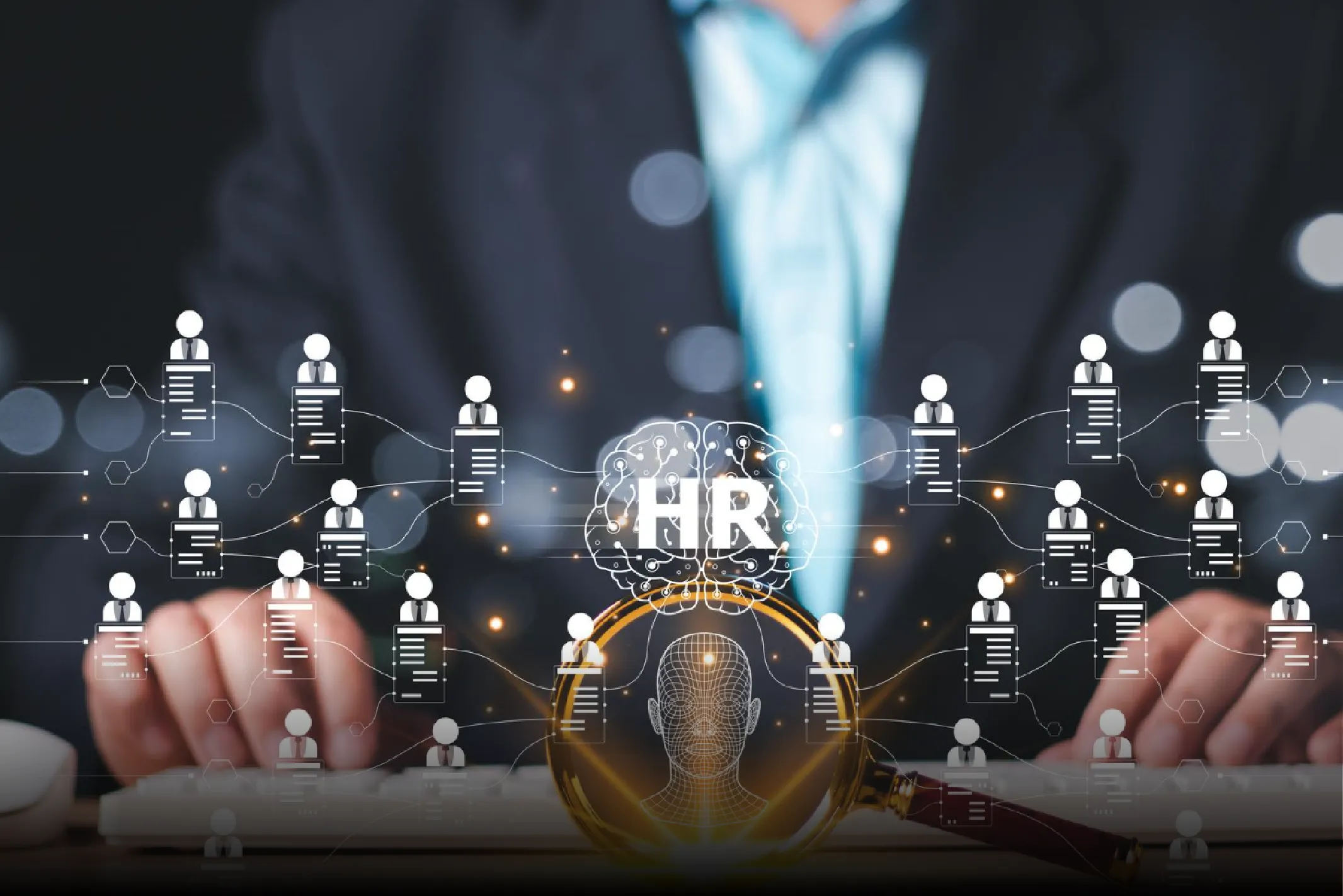
The biggest change may happen inside the HR profession itself. When machines take on more drafting, searching, summarizing and routine coordination, the value of the HR professional shifts. Knowing HR policy is no longer enough. Professionals also need to know how to work with AI systems, evaluate their output and provide the right context.
Microsoft’s 2026 Work Trend Index found that 66% of AI users say AI enables them to spend more time on high-value work, while 58% say they are producing work they could not have produced a year earlier. That supports a more useful view of automation. The question is not simply what work disappears. It is what higher-value work becomes possible when routine work takes less time.
This shift will increase the importance of prompt engineering and context curation. HR professionals will need to frame better questions, provide reliable organizational context and challenge weak outputs. Human-in-the-loop evaluation will also become a core capability because AI can produce a confident answer without understanding the full human situation.
This can lead to the emergence of titles such as HR AI Ethics Manager, Strategic Workforce Augmentation Lead, or Employee Experience Data Synthesizer. What matters more than the actual title is the effectiveness of these functions. It is clear that HR has to take on the role of integrating technology with people and business decisions.
Governance, Ethics and Risk Mitigation
Biggest Mistake is treating governance as ‘paperwork’ after you deploy your AI. Your HR system deals with many of the most sensitive pieces of info in your organization. And its outputs have huge implications for everything from who gets hired, to how employees are promoted and experienced. A flawed system can therefore create damage at a very human level.
Bias is one obvious risk. Historical hiring and performance data can carry old patterns into new AI-assisted decisions. HR teams need to test outputs, question unusual recommendations and keep meaningful human review around high-impact decisions.
Privacy is equally important. Employee records, compensation information, performance data and personal details should not become casual inputs into unmanaged AI tools. Clear access controls, approved systems and defined data-handling rules are essential.
Accountability can pose significant challenges. In fact, according to IBM’s report, over 68% of organizations are having slow AI adoption. This is a warning for HR leaders. If no one knows who makes decisions assisted by AI, adding new technology would not help in this case.
The practical answer is not to slow every AI project to a crawl. It is to define where AI can recommend, where it can act and where a person must decide. That is the foundation of responsible generative AI in HR.
Conclusion
HR leaders should resist two lazy conclusions. The first is that AI will replace HR. The second is that adding AI to existing HR processes automatically makes them better. Neither holds up under scrutiny.
The more realistic path is to redesign work around the strengths of both sides. AI can absorb repetitive information-heavy tasks, while HR professionals spend more time on judgment, relationships, workforce strategy and culture. That requires a disciplined rollout.
Start by auditing low-risk administrative bottlenecks. Then pilot augmented workflows with clear human oversight. Finally, scale only after establishing usage policies, accountability and continuous upskilling.
The real measure of generative AI in HR will not be how much work a company automates. It will be whether HR becomes more capable of making better decisions while keeping people at the center of them.