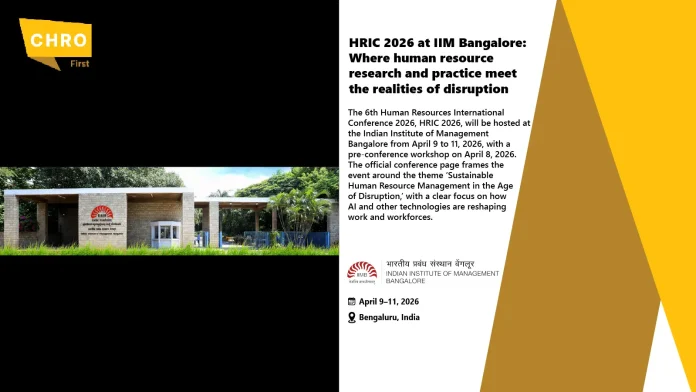
The 6th Human Resources International Conference 2026, HRIC 2026, will be hosted at the Indian Institute of Management Bangalore from April 9 to 11, 2026, with a pre-conference workshop on April 8, 2026. The official conference page frames the event around the theme ‘Sustainable Human Resource Management in the Age of Disruption,’ with a clear focus on how AI and other technologies are reshaping work and workforces.
HRIC is organized by the Human Resources Division of the Academy of Management and brings together academics, practitioners, and doctoral students. The conference pages’ position it as a global academic gathering for people who want to rethink HRM for a period defined by technological transformation, workplace disruption, and new expectations around human and ethical decision-making.
Why HRIC 2026 matters now
The event is built around a real pressure point. HR is being forced to evolve faster than most functions, and the conference leans directly into that tension. The focus is not just on disruption as a concept, but on what that disruption actually demands from people, systems, and leadership.
What stands out is the intent behind the event. It is not trying to simplify the conversation. It is trying to deepen it. The goal is to rethink how HRM operates in a world shaped by AI, shifting workforce expectations, and constant organizational change.
This is also where HRIC separates itself from typical industry events. The structure itself tells you what it is. Papers, symposia, doctoral work, workshops. This is a research-led environment. You are not just consuming ideas here. You are expected to engage, question, and contribute.
What to expect at HRIC 2026?
The format is built for rigor and interaction.
Paper presentation sessions are tightly structured. Each session includes four to five papers, with presenters given ten minutes to present and five minutes for discussion. That forces clarity. No fluff, no long storytelling. Just ideas, evidence, and critique.
Poster sessions shift the energy. They are less formal, more conversational. Designed for interaction, not presentation. The A0 format and open setup encourage real dialogue instead of one-way communication.
Beyond that, the conference includes symposia and workshops that allow deeper exploration of specific themes. These are not surface-level sessions. They are designed for people who want to go deeper into a topic and challenge existing thinking.
The timeline also reflects the seriousness of the event. Submissions open months in advance, with a clear review and acceptance process, followed by structured deadlines leading into the conference. It is built like an academic system, not a commercial event.
Also Read: Latest HR Compliance Regulations in 2026: Key Changes and Their Impact on Businesses
Key themes driving the 2026 program
Digital transformation and AI sit at the center. Not as buzzwords, but as forces actively changing how HR operates. From decision-making to employee experience, everything is being reworked.
The future of work is another core thread. Not just remote versus office debates, but deeper questions around workforce design, skills, and adaptability.
Then there is the human side. Employee well-being, mental health, inclusion. These are no longer side topics. They are central to how organizations perform.
Sustainability and CSR bring in a wider lens. HR is not just managing people anymore. It is also shaping how organizations respond to environmental and social expectations.
And then there is something you do not see often. Indigenous knowledge systems. That signals a willingness to go beyond conventional frameworks and explore alternative ways of thinking about work and people.
Taken together, these themes show one thing clearly. HRIC is not trying to stay within traditional HR boundaries. It is actively pushing beyond them.
A community built around scholarship and exchange
The structure encourages participation. You are not just sitting in an audience. You are part of the conversation. Whether through papers, posters, or workshops, the expectation is that you engage.
The mix of academics, practitioners, and students creates a different kind of environment. You get theory, real-world application, and fresh perspectives in the same space.
Poster sessions and symposia reinforce this. They are designed for open exchange. Less formal, more interactive, and often where the most honest conversations happen.
What you end up with is not a one-directional learning experience. It is a collaborative space where ideas are tested, challenged, and refined.
That is the real value. Not just what is presented, but what gets debated.
Featured speakers and thought leaders
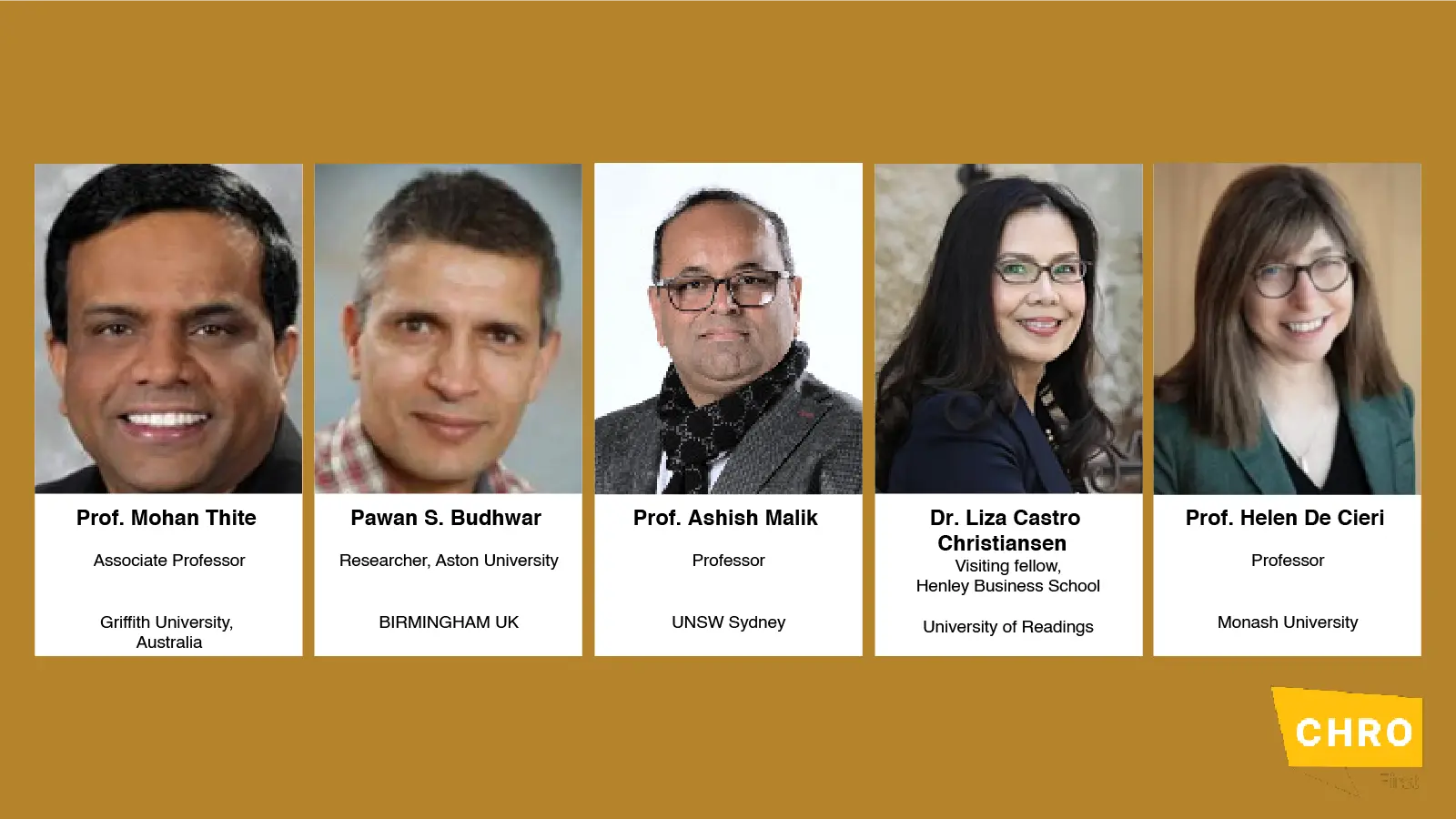
The official speakers page lists a strong academic lineup across leading universities and business schools. Some of the featured names include:
- Prof. Mohan Thite – Associate Professor, Griffith University, Australia.
- Pawan S. Budhwar – Researcher, Aston University, BIRMINGHAM UK
- Prof. Ashish Malik – Professor, UNSW Sydney.
- Dr. Liza Castro Christiansen – Visiting fellow, Henley Business School, University of Readings
- Prof. Helen De Cieri – Professor, Monash University
To view the full speaker list, visit: www.iimb.ac.in/hric2026/speakers.php
Why HRIC 2026 matters
HRIC 2026 matters because it sits at the intersection of research and practice. The conference is focused on the hard questions now confronting HR, from disruption and AI to sustainability and talent strategy, while also giving scholars and practitioners a platform to present work, compare ideas, and shape future thinking.
For anyone working in HR scholarship, organizational behavior, or future-of-work research, this is the kind of conference that pushes the conversation forward rather than simply repeating what the industry already knows.
Explore the official event page here: www.iimb.ac.in/hric2026/index.php