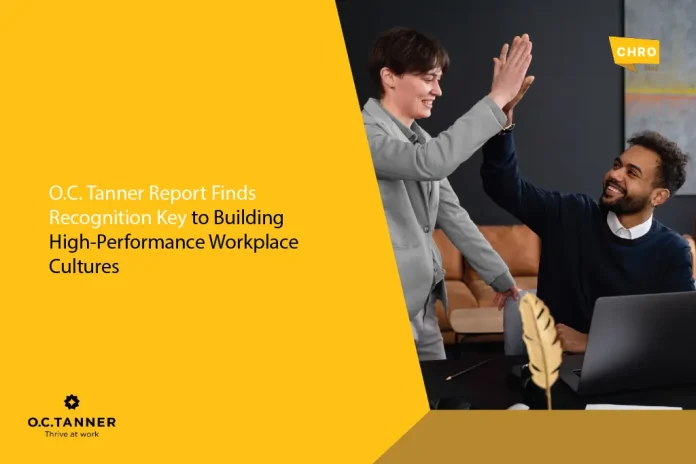
O.C. Tanner has released its second annual State of Employee Recognition Report 2026, highlighting the critical role recognition plays in fostering high-performing teams, strengthening workplace relationships, and driving measurable business outcomes.
Drawing insights from more than 4,200 employees across 10 countries, the report emphasizes how personalized and meaningful recognition contributes to stronger employee engagement, trust, and a deeper sense of belonging. It also outlines how organizations can embed recognition into daily workflows to improve both cultural and financial performance.
“In today’s workplace, there is tension as leaders are increasingly investing in technology to drive performance while employees battle uncertainty and anxiety driven by evolving expectations,” said Mindi Cox, Chief People and Marketing Officer of O.C. Tanner. “Our research reveals a better way to a win-win; companies who invest in employee recognition that fosters social connection at work will build high-performing teams and see both cultural and business ROI.”
The results show that people who work in places where recognition programs have been built into the culture are much more engaged and productive. These programs are a way of not only encouraging individual performance but are also a factor in increasing employee loyalty as employees become more committed to the company if not ready to be advocates for it.
Also Read: O.C. Tanner Expands Culture Cloud with LinkedIn Sharing to Elevate Employee Recognition
The authors of the report underline how recognition can be an effective tool in fostering collaboration, especially with teams that work remotely to one another. In situations where there is little or no funding for the traditional activities aimed at team-building, recognition programs can be a strong means of helping to build rapport and feeling of belongingness.
Another major discovery made by the authors was the role that a social setting has in making employees encourage each other to use recognition platforms. The fact that employees want to participate more if they see one of their peers is also active in the platform means that an appreciation cycle is set up that is self-reinforcing though on raising a cane of recognition champions in frontline sectors such as healthcare and retail the study finds that there is a shortage of these champions – individuals who promote and are role models of recognition – even though the need is greater.
“High-performing cultures don’t run on perks. They run on trust, connection, and people who feel seen,” said Dr. Alexander Lovell, Vice President of the O.C. Tanner Institute. “This report shows leaders how to build recognition into everyday work so it strengthens relationships and drives the outcomes they care about: better work, stronger teams, and higher performance.”
The report underscores a growing shift toward recognition as a strategic driver of both employee experience and organizational success.