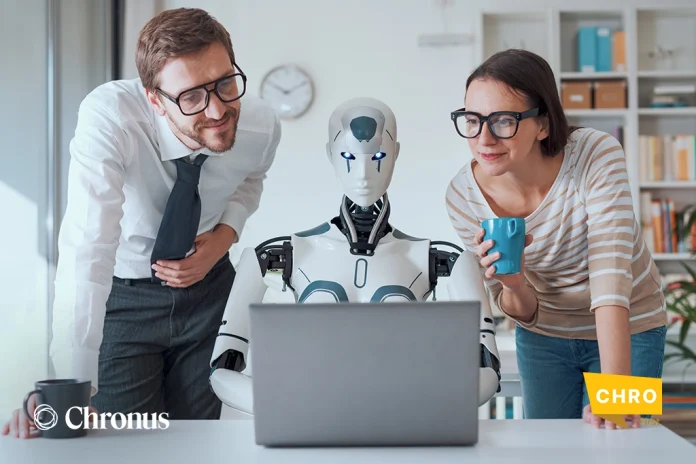
Chronus, the leading platform for enterprise mentoring and employee connection, has introduced Rumi which as the company explains, is the world’s first AI mentor that has been thoroughly tailored to augment and broaden human mentorship in corporate settings. This release is a major milestone in the burgeoning field of AI utilization in workforce development as companies globally are probing different ways in which AI can be a vehicle for employee growth, learning, and career advancement.
Expressing their point of view, Chronus highlighted that Rumi aims to be a tool that enables human mentors rather than does the mentor’s job alone. The main goal is to help organizations provide mentoring and guidance to a larger number of employees. The AI mentor has been embedded into the Chronus mentoring and connection platform, and through the conversational AI feature, it is capable of assisting employees with finding their paths, offering them learning help, giving them insights for career growth, and preparing them for human mentoring interactions.
Unveiling its ideas, the company confided that only a handful of organizations have the capacity to scale their mentoring programs because typically mentorship models heavily depend on the availability of senior and experienced personnel. Also, as businesses expand and workforce compositions become more scattered, it becomes extremely challenging to offer mentorship regularly to global teams. Rumi is expected to be an effective solution by giving mentoring support at all times as well as encouraging human-led development programs.
According to Chronus, the AI mentor can assist employees in handling problems in the work environment, preparing for mentoring sessions, setting up developmental goals, and having access to growth career advice based on the organizational environment. The system can be used to guide conversations and provide learning paths aligned with specific company goals of mentoring and development.
Also Read: Workable Launches MCP Server to Power AI-Driven Recruiting and HR Workflows
The launch builds on Chronus’ broader focus on enterprise mentoring, employee engagement, and workforce connection platforms. The company already provides mentoring and guided conversation solutions to organizations including Amazon, T-Mobile, Electronic Arts, HCLTech, and Zendesk. Chronus has increasingly incorporated AI-powered matching, guided conversations, and relationship intelligence into its platform to support enterprise workforce development programs.
Rumi enters the market at a time when HR technology vendors are rapidly expanding the use of generative AI and agentic AI across recruiting, workforce planning, employee engagement, and learning operations. While most enterprise AI tools have focused on productivity and automation, Chronus is positioning Rumi around human development and relationship-building rather than administrative task replacement.
Implications for the HR Industry
The debut of Rumi can be seen as part of a bigger shift that is currently happening throughout the HR space as AI integration in employee development and workforce experience becomes ever more popular.
On the one hand, mentoring has always been important for employee motivation, development, and retention. On the other hand, traditional mentoring has been hard to scale within larger enterprises because of mentor shortage, inconsistent attendance, scheduling difficulties, and lack of access for younger and remote employees. AI-assisted mentoring could potentially address all these issues by making mentoring accessible for more employees.
Second, while Rumi exemplifies the current trend towards AI-assisted employee development instead of transactional HR automation, the previous stages of AI integration in HR mainly involved recruitment and administrative activities. More specifically, previous waves of automation mainly concerned resume processing and job posting management. Current AI-based solutions target employee coaching, development, learning, and building positive culture.
The presence of AI mentors would also help in speeding up the development of personalized workforce development processes. In other words, using an AI system would enable organizations to offer career advice that takes into account the individual goals of the employee, the nature of the employee’s role in the organization, and organizational needs.
In turn, the introduction of such an application poses some issues related to finding the right balance between automation of the guidance process by using an AI system and keeping the interpersonal component of mentoring alive. Trust, experiential knowledge, emotional intelligence, and empathy have been key characteristics of traditional mentoring processes for many years now.
Finally, the news about the launch of such a mentoring solution reflects the increasing need to provide ongoing support to employees in terms of their career management. The process of digitalization is happening very fast today, so employees need career guidance and mentoring support in order to keep up with changing conditions at work.
Business Impact and Strategic Value
Organizations can benefit from AI mentoring platforms in many ways through enhanced workforce development and talent retention initiatives. Mentoring programs have long been linked to high levels of engagement, leadership development, opportunities for internal mobility, and increased retention success, yet expanding those mentoring programs has often entailed significant costs in terms of administration and resource allocation.
Rumi and other similar forms of AI mentoring can assist organizations to provide expanded mentoring opportunities for their growing and increasingly geographically dispersed workforces without having to allocate significantly more resources. Organizations may be able to support more employees in their career development activities using the AI mentoring platform.
The AI mentoring platform could even assist organizations in improving the process of bringing new employees into their organizations. Employees would receive consistent support through the onboarding process.
Besides that, companies can also get a lot out of better workforce intelligence. With a bit of help from AI mentoring platforms, they can track changes in employee skills and development, pinpoint gaps in skills, understand how engaged people are, and get insights into how ready their workforce is, all of which will equip HR heads with the right information to make talent development decisions.
Besides, this launch might be a great way to complement DEI initiatives on a larger scale. In fact, a lot of big companies leverage mentoring to empower minority groups, develop their leaders and facilitate networking across departments. Mentoring backed by AI might be the way to democratize access to these opportunities for a wider range of employees.
From a business perspective, the announcement by Chronus is a clear reflection of how AI is gradually becoming an integral part of employee experience journey. Increasingly, companies are looking into how AI can be a tool not only for enhancing productivity but also for fostering employee growth, organizational culture, and human connection.
The Future of AI-Assisted Mentorship
Chronus’ launch of Rumi underscores a defining trend in modern HR technology: the convergence of AI, workforce development, and human-centered employee experience strategies.
As enterprises continue investing in AI-enabled workforce transformation, AI mentoring systems are likely to become more intelligent, contextual, and integrated into broader talent management ecosystems. Organizations may increasingly deploy AI assistants to support coaching, learning, onboarding, leadership development, and career planning alongside traditional HR functions.
For the HR industry, this development signals a future where AI becomes a collaborative participant in employee growth rather than simply an automation tool. Companies that successfully combine AI-driven workforce intelligence with meaningful human mentorship may gain advantages in employee engagement, retention, workforce agility, and leadership development in an increasingly skills-driven economy.

