
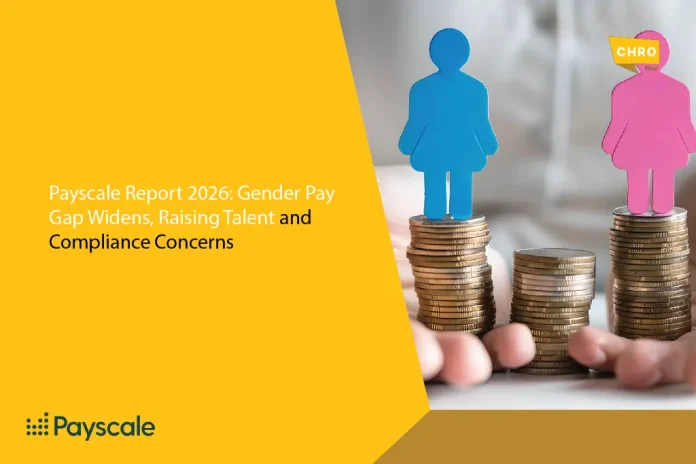
Payscale’s 2026 Gender Pay Gap Report reveals a startling reversal in pay equity progress, with women in the United States now earning $0.82 for every dollar that men make – a decrease from $0.83 the previous year. This gap means that on average, women lose $14,300 annually and over a 40-year career, the total lost earnings can exceed $1 million.
Besides that of fairness, the report also points out larger economic ramifications, estimating that the pay gap leads to $1.1 trillion in lost wages every year in the U.S. workforce. The issue of pay inequality goes beyond the scope of fairness and is a major challenge to the workforce and businesses, impacting talent retention, employee engagement, and overall operational stability.
“Pay transparency is both a workforce engagement and compliance imperative,” said Ruth Thomas, chief compensation strategist at Payscale. “When pay gaps persist or widen, women are more likely to disengage, change jobs, or leave roles altogether, shrinking the available talent pool and increasing turnover costs for employers. At the same time, inconsistent or unjustified pay practices expose organizations to growing legal and reputational risk. Transparent, data-driven pay structures are now essential to building equitable workplaces where all employees can thrive and staying competitive.”
Also Read: Trusaic and gradar Partner to Help Enterprises Navigate Global Pay Transparency Regulations
As the analysis demonstrates, the gaps persist at every level of education and continue to increase with seniority. Women at the age of 45 or older earn just $0.71 for every dollar earned by men, while those in executive positions earn $0.69.
The report also looks at the results of the introduction of laws related to the transparency of payments. Indeed, nine states in the U.S., including California, New York, and Illinois, have successfully closed the controlled pay gaps, while six others have not, which may indicate that compliance alone may not be enough without monitoring and a compensation structure in place.
“Transparency works when it’s treated as a business process, not a checkbox,” said Lulu Seikaly, senior employment counsel at Payscale.
Furthermore, retention is revealed as a major challenge. Women who change jobs generally receive improved salary levels, but those who stay put often settle for lower pay in non-monetary terms like flexibility thus the risk of abrupt departures could arise unexpectedly.
With the spread of worldwide laws, businesses can expect more demands to support their compensation determinations with precise evidence. By taking steps towards eliminating wage gaps, these firms place themselves in a position not only to consolidate their adherence to the law and keep employees but also to stay ahead of competitors in the changing work market.


, revealing that the uncontrolled gender pay gap in the United States is widening)