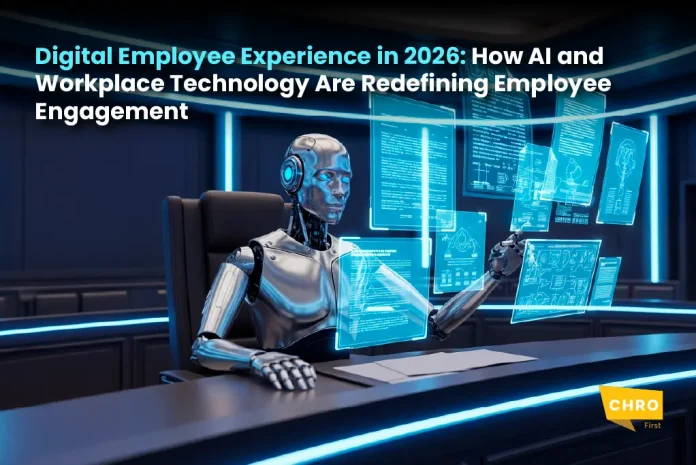
Most companies thought the workplace problem was about giving employees more digital tools. More apps. More dashboards. More notifications. More integrations.
Turns out, that was the problem itself.
Between 2024 and 2025, organizations quietly created a ‘digital friction tax’ inside their own workforce. Employees spent half their day switching tabs, hunting information, sitting in meetings they did not need, and manually doing tiny administrative tasks nobody talks about but everybody hates. Productivity looked busy on paper while people mentally checked out.
That is why digital employee experience in 2026 has become far bigger than an IT conversation. It now sits at the center of culture, retention, engagement, and productivity. Microsoft’s 2026 Work Trend Index frames this shift around ‘agents, human agency, and the opportunity for every organization.’ That sentence alone explains where work is heading. The workplace is no longer becoming more digital. It is becoming orchestrated.
Defining Digital Employee Experience in the AI Era
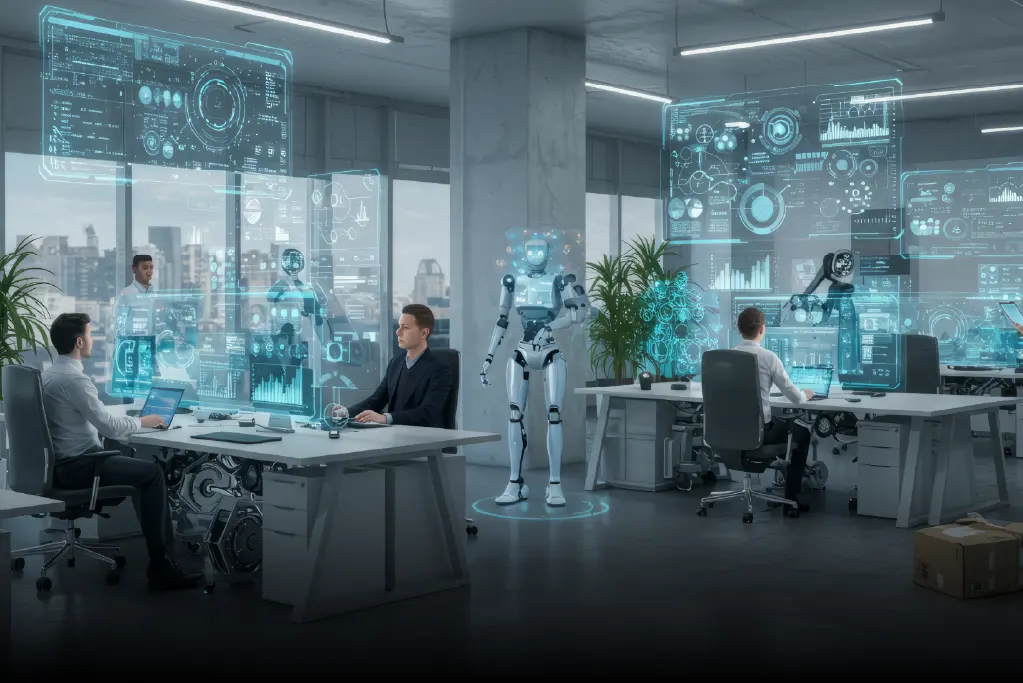
Digital employee experience is the sum of every digital interaction an employee has throughout work. Not just software. Not just devices. Everything.
Every login delay. Every Slack notification. Every HR portal. Every workflow approval. Every meeting invite. Every collaboration tool. Every AI assistant. Every point of friction.
For years, companies treated workplace technology like infrastructure. If the software existed, the job was considered done. Employees were expected to adapt around fragmented systems. That mindset is collapsing fast.
In 2026, digital employee experience is shifting from passive tools to active systems. Earlier workplace platforms waited for employees to click, search, request, or escalate. Modern AI-powered workplaces predict intent before employees even ask. The difference sounds subtle until you experience it.
One environment makes employees chase work.
The other removes invisible obstacles before they appear.
That is the real shift.
McKinsey’s workplace research from April 2026 discovered that employee AI usage at work increased from 30 percent in 2023 to 76 percent in 2025. AI technology transforms work processes because it creates new methods of working instead of existing as a supplementary tool. Most organizations maintain the belief that they must purchase software licenses for AI adoption according to the statement. The process requires organizations to redesign their operations and communication methods and decision-making structures which depend on speed and context and automated systems.
That is why digital workplace transformation in 2026 is no longer about digitizing work. It is about redesigning work itself.
The 3 Pillars Shaping Digital Employee Experience in 2026
Agentic AI and Autonomous Workflows
Most employees are not exhausted because of ‘hard work.’ They are exhausted because of shadow work.
Scheduling meetings. Updating CRMs. Chasing approvals. Searching documents. Writing repetitive reports. Filling status trackers. Copy-pasting information across platforms. None of this creates meaningful value. Yet collectively, it drains energy from the actual job employees were hired to do.
Agentic AI is attacking that layer first.
This is where digital employee experience starts becoming operational instead of cosmetic. AI systems are no longer acting like assistants waiting for prompts. They are becoming workflow participants that can execute, coordinate, and resolve tasks across systems.
The biggest shift is not automation itself. It is cognitive relief.
AWS’s April 2026 Deriv case study showed exactly how serious this shift has become. Amazon Q Business reduced new-hire onboarding time by 45%, recruiting task time by 50%, and workload latency by 45%. New employees reportedly reduced ramp-up time from roughly a month to about a week.
That is not just efficiency improvement. That is organizational acceleration.
A lot of companies still treat employee productivity tools like disconnected utility apps. Meanwhile, leading organizations are building intelligent workplace ecosystems where AI handles repetitive coordination work automatically.
And honestly, employees are welcoming it.
Nobody dreams about manually updating spreadsheets at midnight. Nobody feels emotionally fulfilled after attending seven back-to-back meetings discussing another meeting.
The companies winning in digital workplace experience understand one thing clearly. Employee energy is now a strategic resource.
The less energy wasted on operational noise, the more capacity employees have for problem-solving, creativity, collaboration, and decision-making.
That changes culture faster than another motivational town hall ever will.
Hyper-Personalization and the Netflix-ification of Work
The old workplace model treated employees like standardized operating units.
Same dashboards. Same communication style. Same workflow rhythm. Same learning systems.
That approach makes no sense anymore.
People do not work the same way. Some focus deeply in the morning. Some think better late at night. Some learn visually. Some absorb information through interaction. Yet for years, digital workplaces forced everybody into identical systems and called it productivity.
The new generation of digital employee experience platforms is changing that.
Workplaces are becoming adaptive.
Oracle describes employee experience as the sum of every touchpoint employee have with the organization, and Oracle ME now includes more than 90 prebuilt AI-powered transactions designed to personalize employee experiences across work environments.
That matters because personalization is no longer limited to consumer platforms. Employees now expect workplace systems to behave with the same intelligence they experience outside work.
Recommendations. Context awareness. Predictive assistance. Personalized learning. Smart prioritization.
That expectation has entered the enterprise world permanently.
Oracle Grow pushes this even further by adapting growth recommendations based on an employee’s interests, role, and business context. This is important because career development has traditionally been reactive. Employees had to manually search for opportunities, training, or mentorship.
AI-driven workplace experience platforms are now flipping that model.
The workplace increasingly understands employees before managers do.
And yes, that sounds slightly uncomfortable at first. But it also solves one of the biggest reasons employees disengage. Most people do not leave because they hate work itself. They leave because they feel invisible inside rigid systems.
Hyper-personalization reduces that friction.
When work adapts around human behavior instead of forcing humans to adapt around software, engagement naturally improves.
The Frontier Workplace and Hybrid 3.0
Hybrid work used to mean one thing. Employees working from home on video calls.
That version already feels outdated.
Hybrid 3.0 is about merging physical and digital environments into one connected workplace layer. Offices are becoming intelligent environments instead of static spaces.
Meeting rooms now detect occupancy patterns. Collaboration systems automatically generate summaries, assign tasks, and track decisions. IoT-enabled workspaces optimize lighting, temperature, and room usage based on employee behavior. Virtual collaboration spaces increasingly function like persistent digital offices instead of temporary calls.
The important shift is psychological.
Employees no longer experience ‘online work’ and ‘office work’ separately. Both environments are merging into one continuous experience layer.
That changes leadership expectations too.
Managers can no longer measure engagement through physical visibility alone. Presence is becoming less important than participation, contribution, and workflow impact.
Companies still obsessed with badge swipes and desk attendance are solving yesterday’s problem.
The frontier workplace is not about where employees work. It is about how seamlessly work flows across environments.
How Digital Employee Experience Impacts Culture and Productivity
Burnout is often misunderstood.
Most organizations think burnout comes from workload volume alone. In reality, a huge percentage comes from cognitive overload.
Too many systems. Too many interruptions. Too many fragmented workflows competing for attention at the same time.
This is where digital employee experience becomes deeply cultural.
When employees spend less time navigating friction, they spend more time thinking clearly. That directly affects engagement, collaboration, and emotional energy inside organizations.
The rise of the ‘digital concierge’ is part of this shift. AI-powered workplace assistants increasingly guide employees through onboarding, training, internal navigation, benefits, and even career development pathways.
That reduces uncertainty dramatically.
Instead of employees hunting answers across disconnected systems, the workplace itself becomes responsive.
And honestly, younger employees now expect this level of workplace intelligence automatically. They grew up in algorithm-driven environments where platforms adapt continuously around user behavior. Static enterprise systems feel ancient to them.
Companies ignoring this shift are creating invisible frustration inside their workforce every single day.
Eventually that frustration shows up somewhere else:
- lower engagement
- slower collaboration
- rising attrition
- weaker innovation
- emotionally detached teams
Culture is no longer shaped only by leadership speeches or office perks.
It is increasingly shaped by the quality of digital interactions employees experience every hour.
A Strategic Roadmap for Leaders
Most organizations do not have a technology problem.
They have a workflow design problem disguised as a technology problem.
That distinction matters.
Conduct a Digital Friction Audit
Before adding another AI platform, leaders need to identify where employees lose time, attention, and momentum daily.
Look for:
- repetitive manual work
- duplicated approvals
- excessive meetings
- fragmented communication
- unnecessary context switching
- slow onboarding systems
The goal is not digital expansion. It is friction reduction.
Shift from Device Control to Experience Enablement
Old IT thinking focused on control:
- managing devices
- restricting systems
- monitoring usage
Modern digital workplace solutions focus on experience enablement instead.
That means asking a different question.
Not: ‘How do we manage employee technology?’
But: ‘How do employees experience work through technology?’
The difference changes everything.
Upskill Employees for AI Literacy
AI literacy is becoming as fundamental as digital literacy was a decade ago.
Deloitte’s 2026 Global Human Capital Trends survey found that nearly 60% of workers intentionally use AI at work, while only 14% of leaders believe they are adept at shaping human-AI interactions.
That gap is dangerous.
Employees are already adapting faster than leadership structures. Companies that fail to educate managers on AI collaboration, governance, and workflow redesign will create operational confusion very quickly.
Training employees to use AI tools is not enough anymore.
Organizations now need employees who can supervise, collaborate with, and strategically manage AI systems inside daily work environments.
That is a completely different capability.
End Note
The future of digital employee experience is not about replacing humans with AI.
The operational friction needs to be eliminated because it stops people from doing valuable work.
Technology serves as a tool that organizations use to achieve their goals.
The organizations that succeed in 2026 will not necessarily have the most advanced workplace technology. They will have the most thoughtful workplace design. The designers will create workspaces that help people focus while reducing mental load through personalized solutions.
The organizations that ignore this trend will face two negative outcomes which include decreased work efficiency and reduced productivity.
They are risking relevance.
Because talented employees no longer compare employers only by salary or perks. They compare how work actually feels every single day.
That is the real competitive advantage now.
A proper digital friction audit might reveal more about organizational culture than any engagement survey ever will.